
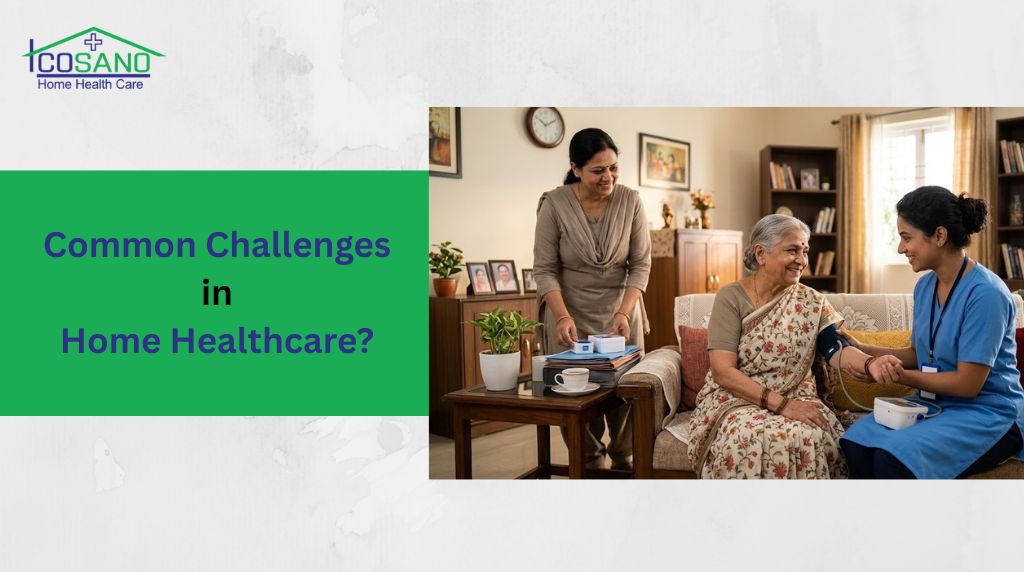
Have you ever thought why many families in India choose home care? Is home really the better place for recovery? Home healthcare provides medical support and daily help right to your doorstep. This makes the recovery of your loved one more personal, comfortable, and convenient.
In India, home healthcare is growing fast. The market was valued at USD 16.30 billion in 2025 and is expected to reach USD 74.57 billion by 2034, growing at a rate of about 15–16% annually.
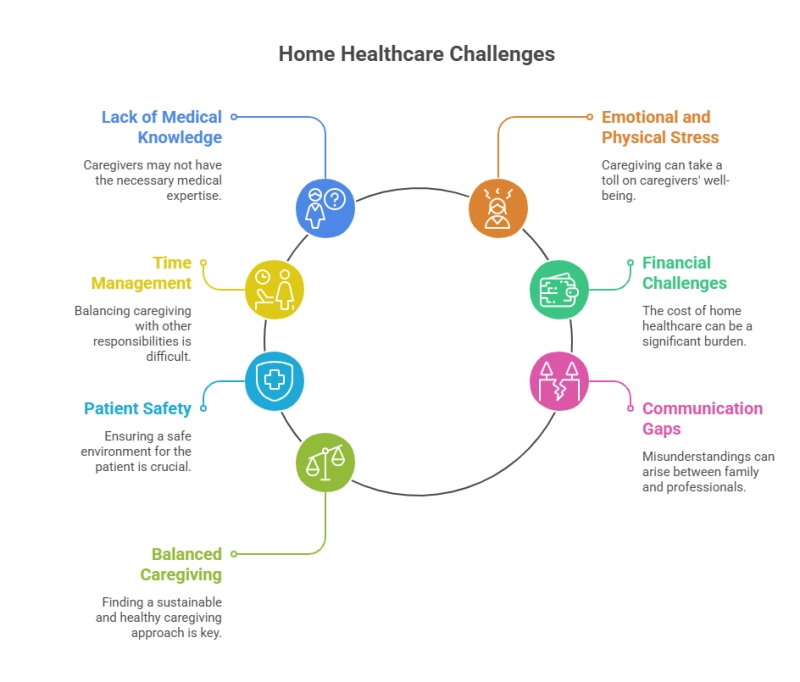
Even with home care benefits, families may still face several home healthcare challenges. Let’s look at common challenges in home healthcare and practical ways families can manage them more easily.
A Real-Life Example: A Day in a Caregiver’s Life
To understand this better, let’s look at a simple example.
Meena is caring for her father at home after his surgery. Her day starts early with preparing breakfast and giving medicines. While cooking, she keeps thinking if she gave the correct dose. During the day, she manages office calls and checks his vitals. By evening, she feels tired but still needs to help him with walking and dinner.
After a few weeks, Meena felt stressed and confused. Then she created a daily routine, took help from a part-time nurse, and used a medicine reminder app. Slowly, things became more manageable and less stressful.
This is the reality many Indian families face-and it shows why proper planning and support are important.
Lack of Medical Knowledge Among Family Caregivers:
Caring for a family member at home means doing things you were never trained to do. This includes handling medications, treating injuries (wound care), and monitoring vitals, which can be challenging and stressful for you.
For example, giving the wrong dose or missing early warning signs can lead to complications. This is one of the most common family caregiving issues and a real barrier to home health care.
In such situations, you can give support of trained nurses, such as those at Icosano Home Healthcare, who can provide peace of mind and ensure your loved one receives safe, professional care at home.
Read Also: Types of Home Healthcare Services and Their Importance in Modern Patient Care
Emotional and Physical Stress on Caregivers:
Taking care of someone close to you can be special, but it can also feel very heavy over time. You may feel tired, stressed, or anxious when caregiving becomes part of your everyday routine.
As per the study, about 54.8% of caregivers experience moderate levels of caregiver burden during home care.
When you are busy caring for someone, you often forget your own health. These things may seem small at first, but when they occur repeatedly, they can affect health. Because when you are not feeling well, how can you care for your loved one?
Simple steps like taking short breaks, joining support groups for caregivers, and asking for help are useful caregiver stress solutions that help prevent caregiver burnout.
Managing Time and Daily Care Responsibilities:
Do you ever struggle to manage caregiving along with your daily routine? Managing family caregiver responsibilities along with a job and home can be tough. For example, you might be cooking while worrying about whether you gave the medicine, or rushing from the office to home straight to a doctor’s visit. Doing many things at once leaves you tired and affects family life.
A simple daily plan and sharing tasks with relatives help you. Also, you can hire part-time help, such as a caregiver who visits for a few hours daily to assist with bathing, feeding, or medications, making daily life much more manageable.
Financial Challenges in Home Healthcare:
One of the biggest challenges families face with home care is the ongoing expenses. However, compared to long hospital stays, home healthcare can often be a more cost-effective option.
Here are some common home care expenses and their approximate costs:
| Home Health Care Services | Cost |
| Medicines | Rs 2,000–Rs 5,000/month |
| Nurse Visits | Rs 500–Rs 1,500/day |
| Equipment Rent | Rs 3,000–Rs 10,000/month |
Looking at these costs, it is clear how quickly expenses can become difficult without planning. Instead of paying daily nurse charges, you can choose a monthly care plan with a trusted provider.
Tracking medicine costs in advance and comparing service packages also helps you manage money and reduce unexpected spending.
Read Also: Why Renting Medical Equipment is a Smart Choice for Home Healthcare
Cost Comparison: Home Care vs Hospital Stay
| Type of Care | Approx Cost (7 Days) |
| Hospital Stay | Rs 25,000–Rs 70,000 |
| Home Healthcare | Rs 10,000–Rs 25,000 |
Home care can save money while giving comfort of home environment.
Government Schemes and Insurance Support
Many families are not aware that they can get financial help.
- Ayushman Bharat Yojana helps eligible families with medical expenses
- Some private insurance plans cover home healthcare services
- Tax benefits are available under Section 80D
Checking these options can reduce financial burden.
Ensuring Patient Safety at Home:
Keeping a patient safe at home can be harder than it looks and is one of the common home healthcare problems families face. Everyday risks, such as a wet bathroom floor, can cause a dangerous fall, and failing to clean a wound properly can lead to infection.

Following simple hygiene habits and professional support can make your home care safer. Wash your hands before and after care, keep wounds clean, and disinfect equipment. With trained professional caregivers guiding medication administration, monitoring for warning signs, and assisting with movement, you can prevent falls, any medical errors, and other complications.
Communication Gaps Between Family Members and Professionals:
Have you ever been confused regarding medicines or care instructions? Miscommunication among doctors and caregivers can easily lead to mistakes if instructions are not clearly understood or shared.
The following are the common impacts of miscommunication in home healthcare:
| Situation | Possible Impact |
| Unclear medicine instructions | Recovery slows, side effects may occur |
| Missed follow‑up appointments | The condition can get worse |
| Poor coordination | Care feels confusing and inconsistent |
Regular updates, clear notes, and professionally coordinated care can help you and your family stay informed and maintain consistent care. Keep a daily care log, and sharing your updates with everyone reduces confusion and improves outcomes at home.
Practical Solutions: Professional Home Healthcare Support
With the right professional home care assistance support, caregiving can become more manageable, helping you and your family feel less stressed and more supported.
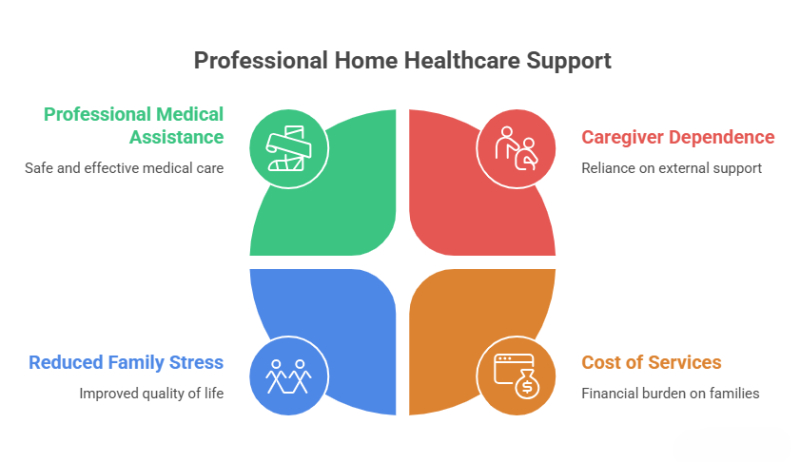
The following are services that make a difference:
- Nursing care: Medical needs, like injections, wound care, and vital checks, are handled safely.
- Physiotherapy: Helps in recovery, improves movement, and reduces complications.
- Caregiver support: Assists with daily routines like bathing and feeding, as well as during walks and other daily activities.
These services not only improve patient health but also give you and your family time to rest and recharge. Trusted providers, such as Icosano Home Healthcare Private Limited in Kolkata, bring trained professionals who deliver safe, compassionate care right to your home.
Building a Balanced Caregiving Approach:
A balanced caregiving approach means combining emotional care with the right support instead of managing everything alone. Let’s understand with an example.
If your family is caring for an elderly person after a stroke. By sharing responsibilities, one member can manage medicines and doctor visits, while another handles meals and daily support. At the same time, hiring a physiotherapist for exercises and a nurse for medical needs reduces pressure.
With planned routines, shared tasks, and professional help, ensure recovery and make caregiving manageable.
Conclusion: Creating a Balanced and Safe Home Care Environment
Caring for someone at home has its own challenges, but the right approach can make things easier. Knowing the common problems, staying organized, and asking for help when needed improve comfort and safety. Support from family, along with professional services, reduces stress and improves care. With this balance, families can create a caring home where loved ones recover more quickly and effectively.
FAQs:
Common challenges in home healthcare include lack of medical knowledge, caregiver stress, and safety risks at home. Many families also struggle with time management and high home healthcare costs.
Home healthcare in India is more comfortable and cost-effective for recovery and elderly care. But serious conditions may still need hospital treatment based on doctor advice.
Yes, proper home patient care with regular monitoring reduces complications. This helps avoid frequent hospital visits and supports faster recovery.
Schemes like Ayushman Bharat Yojana provide financial help for treatment. This reduces the burden of home healthcare expenses.
Common risks include infections, medication mistakes, and falls at home. These home healthcare challenges can be reduced with proper care and guidance.