
What matters more to you, hospital bills or the hidden costs your families pay? Hospital invoices show the price of treatment, but they never show the sleepless nights, skipped meals, and emotional challenges that families face. This is where the conversation about home healthcare costs becomes important.
In this guide, we look at how home care can reduce financial stress, protect family well‑being, and still deliver safe and quality medical support.
At the same time, many families today are also asking an important question:
“Is it always necessary to stay in the hospital for recovery, or can the same care be provided safely at home at a lower cost?”
To answer this, we need to understand how hospital care costs work and how home healthcare services are changing the way patients receive medical support.
Understanding Hospital Care Costs:
When you or your loved one is admitted to the hospital, the bill mostly feels confusing. Because every single service has a separate charge, and at the end, it becomes one large bill.
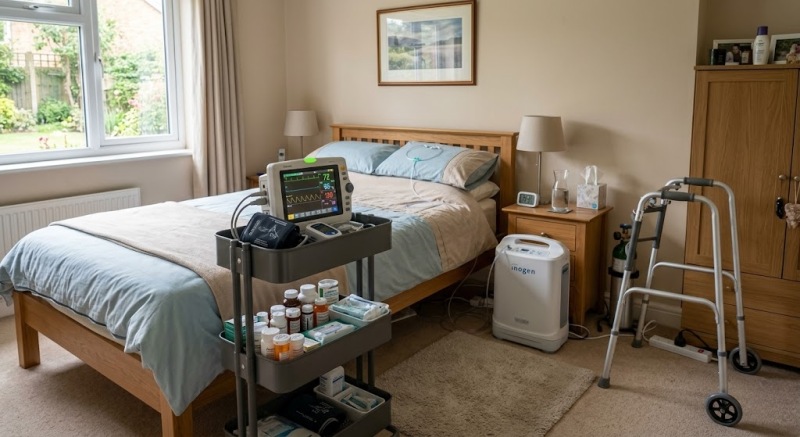
Let’s show each service and its cost details:
- Room charges: It varies based on whether you are in a general ward, a private room, or the ICU.
- Doctor consultation fees: Covers the doctor’s daily rounds and any specialist consultations.
- Nursing charges: Include 24/7 bedside care provided by nurses throughout your stay.
- Diagnostic tests: You pay for investigations like blood tests, X‑rays, or scans that help guide treatment.
- Medicines and consumables: This includes tablets, injections, syringes, gloves, and other supplies used during care.
At the same time, with the main medical charges, families also face indirect expenses such as travel, food, and staying with patients. These costs are not medical, but part of the hospital stay.
But many families wonder: “Is there a way to receive safe, supportive care at home without the heavy hospital costs?” Yes, let’s look at how home healthcare services bring medical care into the comfort of your own home.
What Home Healthcare Includes & How It Works:
Home healthcare provides professional medical and supportive care in the place you feel safest at home. It is mostly beneficial for people who need continuous care and recovery support daily.
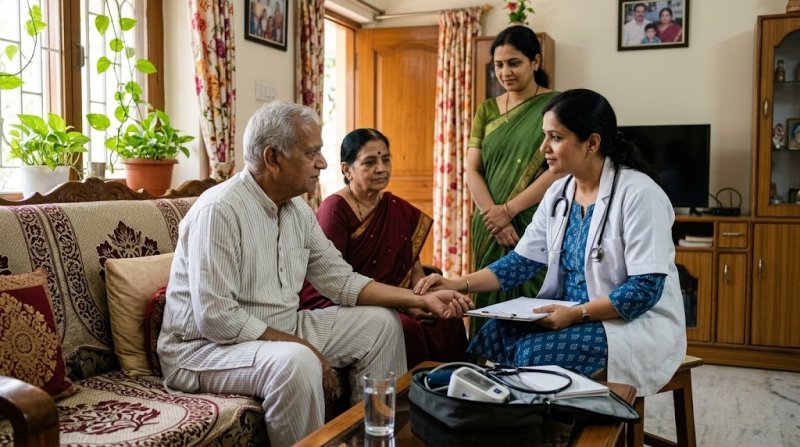
Common services include in-home healthcare as follows:
- Doctor visits at home
- Skilled nursing care
- Physiotherapy sessions
- Elderly care
- Post‑surgical support
But, how does home healthcare work? At Icosano, home healthcare begins with a simple check. Our team listens to your medical needs and daily challenges, then we design a care plan just for you. Our skilled nurses and doctors bring hospital‑level support into your home, using modern tools and compassionate care.
The cost of patient care services at home, including in‑home nursing services, is often easier to manage compared to long hospital stays. Home healthcare still gives patients the comfort and emotional support of being at home.
Read Also: Types of Home Healthcare Services and Their Importance
Direct Cost Comparison: Home Healthcare vs Hospital Care
When you look at hospital bills, the difference between home care vs hospital costs becomes clear. Hospitals’ bills include room charges, nursing, doctor visits, and infrastructure costs. On the other hand, home healthcare focuses only on what you truly need, making pricing more flexible and manageable.
| Cost Factor | Hospital Care (Per Day) | Home Healthcare (Per Day) |
| Room Charges | Rs 1,000 – Rs 10,000+ | Not applicable |
| Nursing Care | Rs 2,500 – Rs 6,000 | Rs 800 – Rs 2,500 (12-24h shifts) |
| Doctor Visits | Rs 800 – Rs 2,000 | Rs 1000 – Rs 1,500 (Home visit) |
| ICU/ Critical care | Rs 12,500 – Rs 25,000+ | Rs 7,000 – Rs 14,000 (ICU at home) |
| Total Estimated Cost | Rs 4,300 – Rs 43,000+ | Rs 1,800 – Rs 14,000 approx. |
Note: The costs shown in the table are approximate and intended for general comparison between hospital care and home healthcare. Actual expenses may vary based on the healthcare provider, city, patient condition, and level of medical support required.
NATHEALTH reports that home healthcare is one of India’s most affordable care options. Industry estimates suggest that it can lower treatment costs by 30–40% compared to long hospital stays.
Let’s understand with an example to make it clearer. For example, during post‑surgery recovery, you often need monitoring, medicines, and basic nursing care. In hospitals, daily bills are higher because of infrastructure and staffing. At home, the same support can be provided at a lower cost, focusing only on necessary services.
That’s why many families find healthcare cost savings at home not just practical, but also comforting care that protects both health and peace of mind.
Read Also: Why Renting Medical Equipment is a Smart Choice for Home Healthcare
Quality of Life Comparison: Home Care vs Hospital Stay
Cost is important, but recovery experience also matters for patients and families.
| Factor | Hospital Care | Home Healthcare |
|---|---|---|
| Sleep Quality | Often disturbed | Comfortable sleep |
| Family Interaction | Limited visiting hours | Unlimited family support |
| Mental Well-being | Stressful environment | Familiar and peaceful environment |
| Infection Risk | Higher | Lower |
| Recovery Motivation | Moderate | Higher |
Many patients feel emotionally stronger when they recover in their own home environment.
Additional Benefits Beyond Cost Savings:
You can save money with home healthcare, but additionally, many hidden benefits truly matter to you and your family.
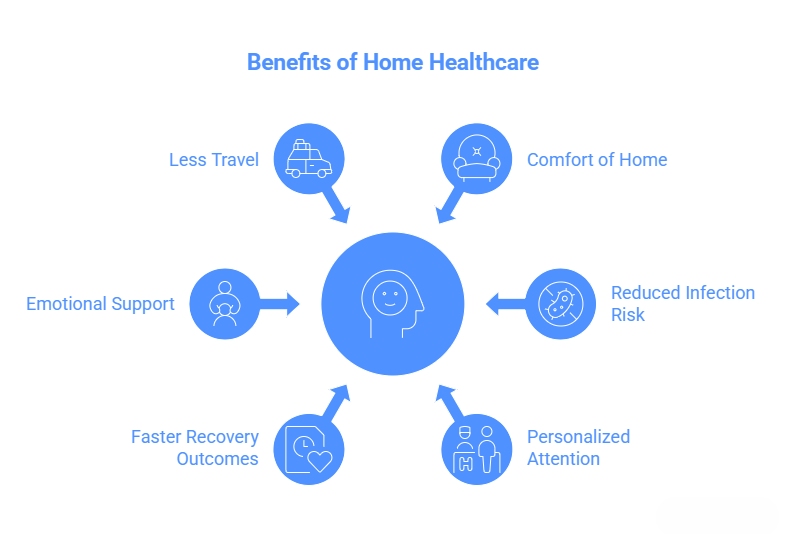
- Comfort of Home Environment: when you are surrounded by familiar spaces, recovery becomes faster.
- Reduced Infection Risk: Lowers the chance of hospital‑acquired infections when you are staying at home.
- Personalized Attention: Treatment plans are created to match your health requirements.
- Faster Recovery Outcomes: When you are stress-free, your body can heal faster.
- Emotional Support from Family: Being close to your family helps you feel stronger and recover better.
- Less Travel: No repeated hospital visits or long waiting times required.
Together, these benefits make the cost of home healthcare not only affordable but also meaningful through the medical care with comfort and family support.
Read Also: Benefits of Home Healthcare: Safe, Personalized Care at Your Doorstep
Myths vs Facts About Home Healthcare:
Many people still have misconceptions about home healthcare.
| Myth | Fact |
|---|---|
| Home healthcare is only for elderly people | It is useful for post-surgery recovery and chronic care |
| Hospital care is always safer | Many treatments can be safely done at home |
| Home healthcare is expensive | It is often 30–40% cheaper |
| Nurses at home are less trained | Most home care nurses are hospital-trained professionals |
Understanding these facts helps families make better healthcare decisions.
When Hospital Care is Still Necessary:
Home healthcare is good when you need recovery and long‑term support. However, there are some medical situations when hospitals are the only safe option for you.
| Situations | Why Hospital Care is Needed |
| Emergencies | If you or your family members have a heart attack, stroke, or severe injury, a hospital can provide immediate ICU support with advanced treatment. |
| Major surgeries | If you ever need a major operation, you will require advanced equipment, sterile conditions, and a full medical team, and those are only available in hospitals. |
| Advanced diagnostics | If you ever need complex imaging or lab investigations, you will have to go to the hospital, where an accurate diagnosis can be made. |
| Critical monitoring | When you require continuous observation or life‑support systems, hospital care keeps you safe and ensures a quick response. |
Imagine you are recovering from a small procedure, home healthcare gives you rest in your own bed, surrounded by family, with flexible care that saves costs. But if you suddenly face something serious, like a heart attack, the hospital is where every second matters and the right team and equipment are ready for you.
Conclusion:
Home healthcare is usually more affordable and comforting, especially for recovery, chronic care, and support for the elderly. The cost of home healthcare in Kolkata, supported by providers such as Icosano, is generally lower than repeated hospital visits, making it a practical choice for families. Still, the right option depends on your medical condition and care needs. Hospitals remain essential for emergencies, surgeries, and advanced diagnostics, while home care offers flexibility, emotional support, and convenience.
FAQs:
Yes, in many cases home healthcare services cost less than hospital care, especially for recovery, elderly care, and long-term nursing support at home.
Patients can choose home healthcare services for recovery, elderly care, physiotherapy, and chronic illness management when hospital admission is not required.
Yes, trained home nurses and doctor home visits can safely support post-surgery recovery with wound care, medication support, and monitoring.
Many patients recover faster with home healthcare support because they stay in a comfortable environment with family care and less stress.
Families benefit from reduced hospital costs, less travel, and the ability to support their loved ones during recovery at home.