

The procedure for replacing the knee joint has been completed, but what happens after you or your loved one returns home?
At that time, you may be concerned about your loved one’s ability to walk safely, climb stairs, sleep, and care for their knee after you leave the hospital. After surgery, many patients want to start their normal daily routines, but their knee still needs time to heal.
But when you know about home care after knee replacement surgery, you are able to care for the incision, manage any pain or swelling and move safely.
In this guide, we cover why home care matters after surgery, tips for home care after knee replacement surgery, and when to seek professional home care support for a smooth recovery.
Why Home Care Matters After Knee Replacement?
Knee replacement surgery replaces the damaged parts of your knee joint with prosthetic joints to minimise pain and improve mobility. Also, surgery makes your daily routines easier, but getting back to those activities takes time. But your recovery also depends on your knee replacement aftercare.
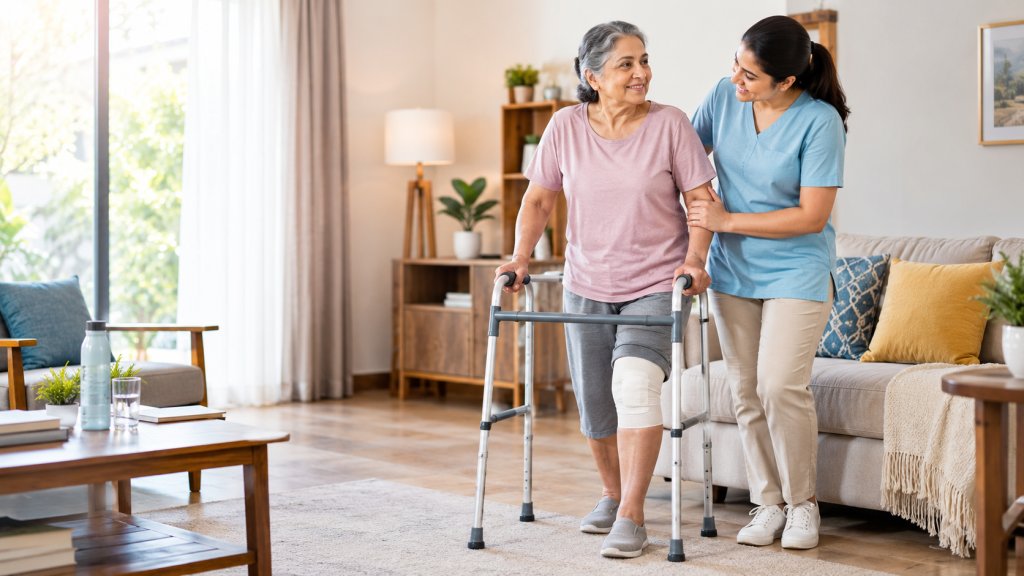
When you are at home, simple things such as getting out of bed, walking to the bathroom or preparing a meal may need extra care. Good home care allows you to move safely and comfortably and recover faster.
Having your family or caregiver nearby can also make you feel more secure and supported during this time. Now, let’s look at some practical post knee surgery care tips that can help you manage your recovery at home.
What to Expect After Coming Home From Knee Replacement Surgery?
Coming home is an important step, but you may still need help with everyday activities during the early recovery period. You may notice:
- Limited mobility: You may need a walker or crutches to move around safely.
- More time for daily tasks: Getting out of bed, using the bathroom or dressing may take extra time.
- Gradual improvement: Walking, strength and confidence usually improve over the following weeks.
- Need for support: Family members or caregivers may help with daily activities and appointments.
Your recovery time varies from person to person, so follow your surgeon and physiotherapist’s advice throughout recovery.
Simple Ways to Support Recovery at Home:
A well-organised home can make recovery more comfortable and help reduce the risk of falls. A few simple steps can make daily care easier:
- Keep medicines, water, your phone and frequently used items within easy reach.
- Keep floors, hallways and walking paths free from clutter, loose rugs and wires.
- Prepare meals in advance to reduce unnecessary standing and walking.
- Keep important appointments and medicines organised.
- Arrange family or caregiver support for transport, household work and daily activities when needed.
Wound Care and Medication Management:
Taking care of your incision and handling medicines properly represents the key elements of your treatment after having undergone your knee surgery.
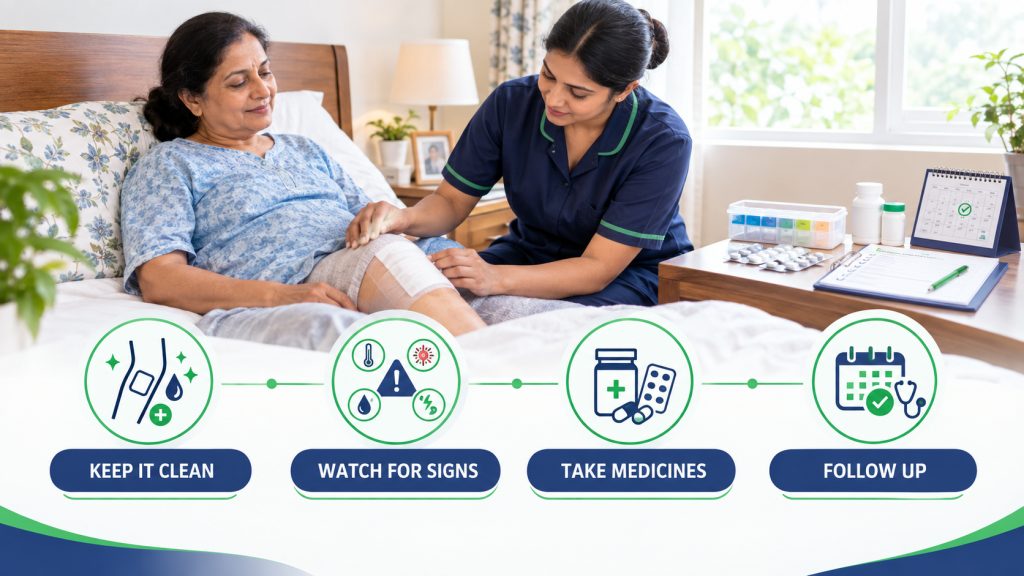
Here are effective tips for caring for the wound and managing your medications properly:
- Keep your incision dry and clean: It is important to follow your doctor’s guidelines on changing dressings and bathing. Do not use homemade remedies or any creams or powders without first consulting your doctor.
- Pay attention to possible signs of infection: If you observe any redness, swelling, fever or any increase in pain and pus coming from the place of incision, then you should see your doctor because these are the warning signs of possible wound infection.
- Follow the course of medications: Always follow the prescription schedule for your pain medicine, and take your anticoagulant therapy carefully to prevent blood clots.
- Do not change medicines yourself: Never change, alter, or skip your medications without informing your doctor.
- Keep your follow-up: Attend your scheduled orthopaedic surgeon follow-up so your incision, movement and overall progress can be assessed.
Managing Pain and Swelling at Home:
Swelling is very common after knee replacement surgery. In a study involving 86 patients, it was observed that 90.7% of them had leg swelling in the initial period of recovery.
To manage pain and swelling at home:
- Follow your prescription for pain medication.
- If you experience swelling in your knee joint, lie down with your leg elevated and use the ice pack as suggested by your doctor or physiotherapist.
- Continue your physical activities and exercises and don’t keep your knee joint inactive, but make sure you take rest after each activity.
Cryotherapy has some scientific evidence too. A 2024 meta-analysis of 31 randomised controlled trials found a link between cryotherapy and reduced pain within the first three days after total knee replacement surgery.
Mobility and Physical Therapy Exercises:
Knee joint mobility is an important part of recovery. Physiotherapy after knee replacement may allow you to develop muscle strength and increase the mobility of your knee joint.
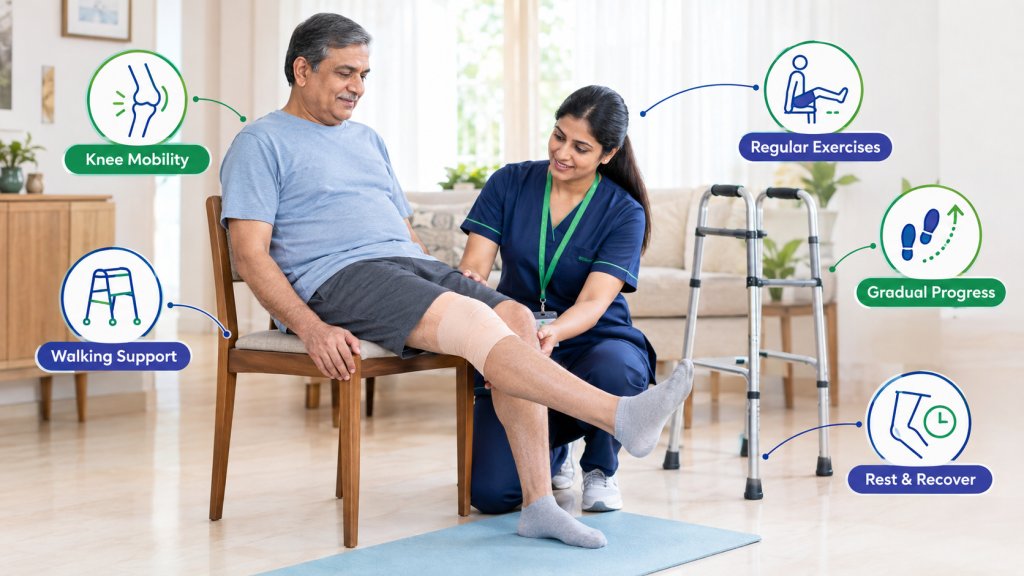
A 2024 study found that 95% of people achieved at least 90° of knee flexion within six weeks when they followed their physiotherapy programme.
To make the rehabilitation easier, here are several simple recommendations:
- Start with the simple exercises your physiotherapist recommends.
- Follow the exercises on a regular basis.
- Use a walker and crutches until your physiotherapist says otherwise.
- Increase the distance walked gradually.
- Don’t do too much, even if your knee feels well on a particular day.
- Rest your knee between the exercises and activities.
Read Also: What Are the Benefits of Physiotherapy at Home? A Complete Guide
Returning to Daily Activities After Knee Replacement:
You can gradually return to your normal routine as your strength and movement improve. Start with simple activities and avoid putting too much stress on the operated knee.
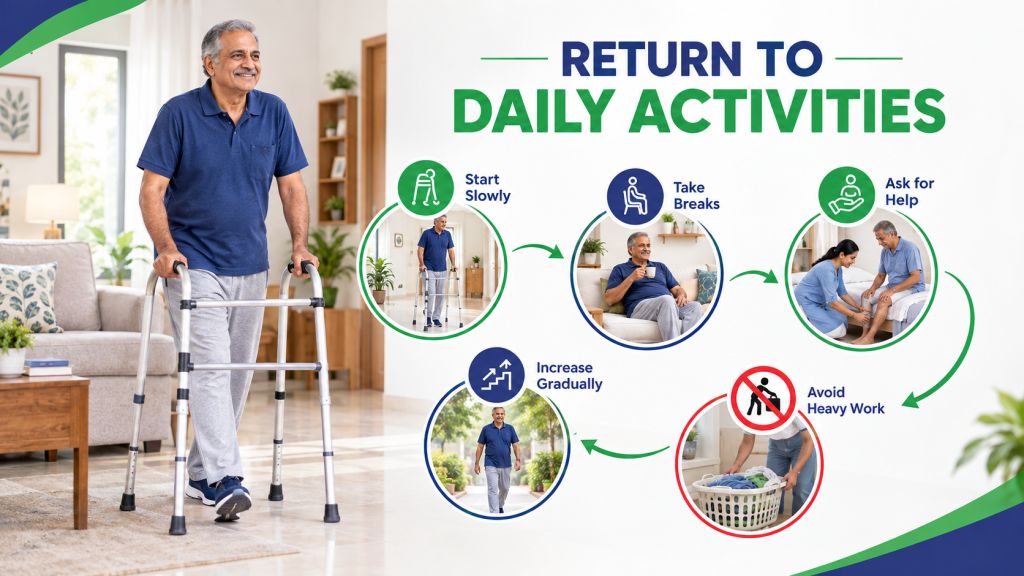
- Move around the house using the walking support recommended by your physiotherapist.
- Take breaks between activities instead of standing or walking for long periods.
- Ask for help with bathing, dressing or household work when needed.
- Avoid rushing back to heavy household work or strenuous activities.
- Increase your daily activities only as advised by your healthcare team.
Preparing Your Home for a Safe Recovery:
Before you come home, make a few simple changes around the house to make your recovery safer.
These include:
- Remove loose rugs, clutter and wires from walking areas.
- Keep medicines, water and daily-use items nearby.
- Use a comfortable chair that is easy to sit on and get up from.
- Keep your walker or crutches within easy reach.
- Make sure your bathroom, stairs and hallways have enough light.
- Use a grab bar or shower chair if needed.
- If you use a squat toilet, consider a Western-style or raised toilet for some time, if your doctor recommends it.
- Ask family members to help with cooking, bathing and household work when needed.
Sleep, Nutrition, and Daily Comfort:
Taking care of your sleep, diet, and everyday comfort may make your knee replacement recovery at home more comfortable.
For this:
- Follow your doctor’s recommendations for sleeping after your knee operation, and keep water and medications nearby.
- Eat balanced meals and include protein, vegetables, fruits, whole grains, calcium, and Vitamin D in your food.
- Drink plenty of water.
- Wear comfortable and non-slip shoes.
- Stop smoking because it is noted that it inhibits healing.
When to Seek Professional Home Healthcare Support?
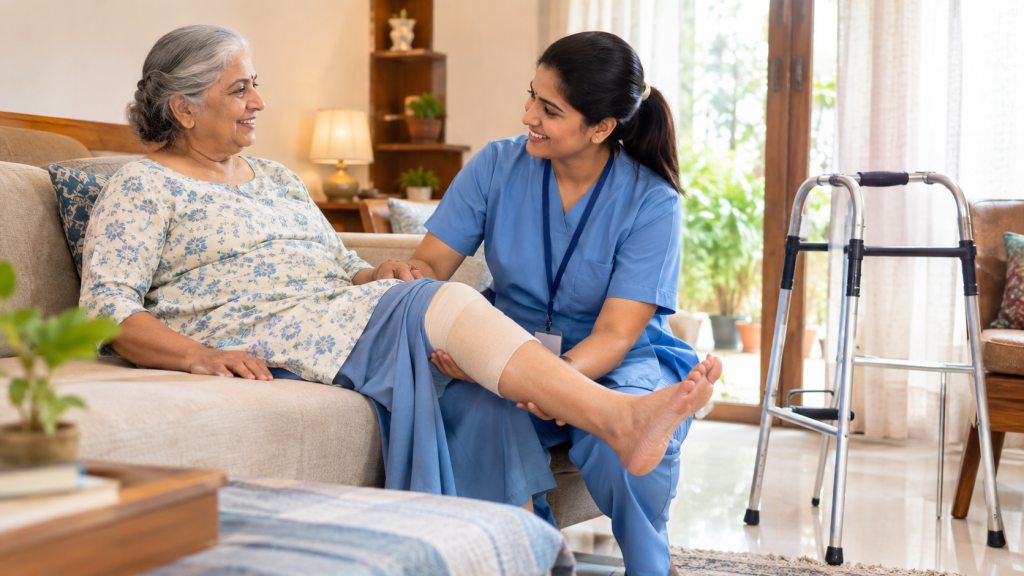
Sometimes, you or your loved ones may need a little extra help after knee replacement, especially:
- If a person lives alone and is old
- Have difficulty moving around
- Need help with everyday tasks
Home healthcare services can bring support to your home through nursing care, physiotherapy or occupational therapy. A caregiver can also help with bathing, dressing, meals, medicines or wound care. This can be especially helpful when travelling to the hospital for regular support is difficult.
Read Also: Home Physiotherapy vs Clinic Therapy: How to Choose the Right Option
When to Call Your Doctor Immediately?
Contact your physician if you observe the following changes:
- High fever or persistent fever.
- Increased inflammation, redness, and warmth around the surgical site.
- Severe bleeding or sudden, intense pain.
- Sudden leg pain or swelling that may indicate a blood clot.
- Inability to walk or sudden inability to put weight on the affected leg.
- Any symptom that may be a cause for worry.
Conclusion — Recovering Safely and Confidently at Home
Recovering from knee replacement takes time, patience and the right care. Following your doctor’s advice and making small changes at home can help you or your loved one feel safer and more comfortable during this phase.
If you or your family need additional support, Icosano, Kolkata, can help with appropriate home healthcare services. With the right care and support, you can gradually return to your daily routine with greater confidence.
FAQs: Tips for Home Care After Knee Replacement Surgery
Follow your surgeon’s instructions for knee replacement aftercare, keep the incision clean and dry, take medicines as prescribed, and continue recommended exercises and walking.
You can manage swelling after knee replacement surgery by resting, elevating your leg, using ice as advised, and following your physiotherapist’s activity recommendations.
Do the knee replacement exercises recommended by your physiotherapist to improve flexibility, muscle strength and movement. Avoid adding new exercises without professional guidance during recovery.
Most people can return to many normal daily activities within about 3 to 6 weeks, but complete recovery can take several months. Recovery time depends on your health, mobility, and physiotherapy progress.
Many patients use a walker for several weeks and gradually move to a cane or independent walking. Your surgeon or physiotherapist will decide when it is safe to stop using walking support.
Sleeping on your back with the operated leg kept straight is commonly recommended during early recovery. Avoid keeping a pillow directly behind your knee unless your doctor advises otherwise.
A caregiver can help with walking, bathing, dressing, meals, medicines, hospital visits, and daily activities. They can also make sure the home is safe and support the patient during recovery.
Home nursing may be useful when a patient needs professional help with wound care, medicines, mobility, personal care, or recovery monitoring. It can also help when the patient lives alone or family support is limited.