

When you care for a bedridden patient at home, you may focus on medications, meals, hygiene, and regular repositioning. But selecting a hospital bed mattress for home use is also a key factor in their daily lives.
A patient who spends around 16-20 hours in bed each day can develop prolonged pressure over areas such as the hips, heels, shoulders and tailbone. The right medical mattress for home can help redistribute this pressure while making long hours in bed more comfortable.
- But how do you know which mattress is best?
- Is an air mattress better than a regular one?
- What size should you choose?
In this guide, we answer all your questions about choosing, setting up, and using the right medical air mattress for a bedridden patient at home.
Understanding Your Patient’s Needs Before You Buy:
Here are some points that you have to check before you buy a medical mattress for home for your loved one, and why this matters:
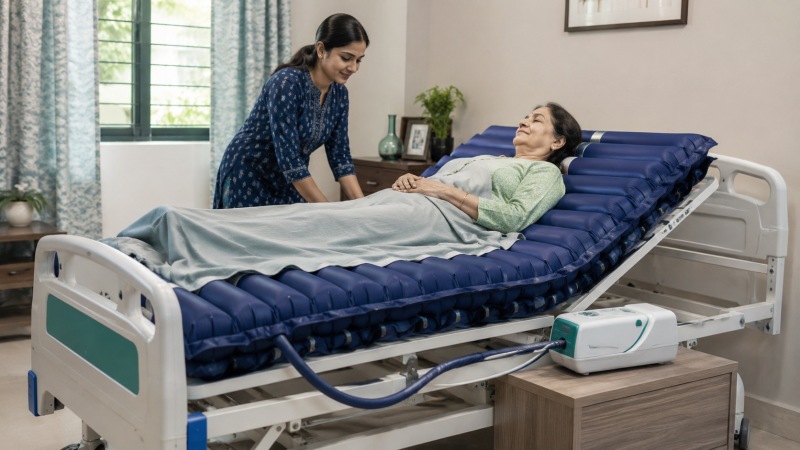
- Time in bed: If your loved one spends a lot of time in bed, it is better to purchase a mattress that relieves pressure well.
- Mobility: If a patient is not mobile, they may need better pressure relief to prevent sores.
- Skin condition: Having pressure sores or problematic skin may require more pressure relief.
- Weight: Make sure to check the weight limit of the mattress.
- Moisture: If the patient sweats a lot or has bladder leakage, choose a cover that is waterproof and easy to clean.
- Bed type: Make sure it is suitable for a standard or a bariatric bed.
- Adjustable bed: The mattress should bend well when it is time to raise the back or the legs of the person.
Types of Hospital Bed Mattresses Explained:
When you start looking for a hospital mattress for home use, you may find several types.
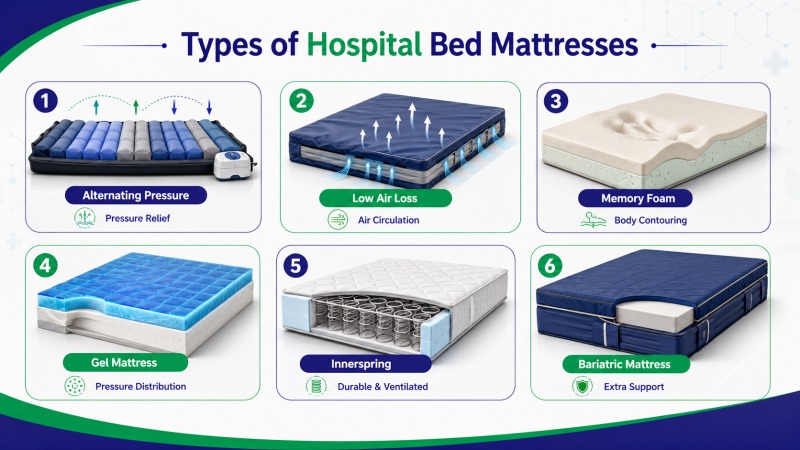
Here are the types of hospital bed mattresses:
1. Alternating Pressure Air Mattress:
The mattress is made up of cells filled with air that inflate and deflate in turns. This is to ensure a change in pressure points of the body, helping to reduce the development of pressure sores.
2. Low Air Loss Mattress:
This type of mattress moves air through the mattress surface and allows better temperature regulation.
3. Memory Foam Mattress:
Memory foam adjusts according to the body’s shape and reduces pressure on any parts of the body evenly. It functions quietly and does not require a pump source.
4. Gel Mattress:
The gel mattress consists of a layer of gel that cushions and distributes pressure in the body. It is relatively heavy compared to others.
5. Innerspring Mattress:
In this mattress, springs are surrounded by cushioning materials. The innerspring mattress is known for its durability and has good ventilation capabilities, but it does not provide enough pressure relief for bedridden patients.
6. Bariatric Mattress:
This type of mattress is more supportive and has a greater weight capacity than regular mattresses.
Read Also: Hospital Bed for Home Care: Types and Uses
Matching Mattress Type to Patient Condition and Risk Level:
The best mattress for a bedridden patient depends on the patient’s mobility, skin condition, body weight, and how much time they spend in bed.
The table below can help you understand which type may be suitable for different needs:
| Patient’s condition | Suitable mattress |
| Moves and changes position | Using a foam or memory foam mattress |
| Has limited mobility | Alternating pressure mattress |
| Sweats or suffers from moisture issues | Low air loss mattress |
| Requires extra cushioning | Gel mattress |
| Has heavier body weight | Bariatric mattress |
If the patient already has pressure sores, it is best to get medical advice before choosing a pressure-relieving mattress.
Getting the Size Right: Standard and Bariatric Dimensions:
The mattress should fit the hospital bed properly. Mattresses that are too small or large for a particular bed, or poorly fitting, are likely to cause discomfort and create safety issues.
Here are three things to consider when purchasing:
- Bed dimensions: Measure the dimensions of the bed frame in terms of length and width.
- Type of mattress: A standard-size bed requires a standard mattress, whereas a bariatric-size bed requires a wide mattress having weight capacity according to the bed.
- Fit of the mattress: Make sure that the mattress sits well on the bed without any huge space or overhang of edges.
Read Also: How to Choose the Right Hospital Bed for Home Use
Mattress Thickness and Safety Rail Compatibility:
Mattress thickness is not just about comfort. It may also influence the safety of a hospital bed when side rails are installed. Too thick a mattress increases the height of the patient’s body and lowers the level of safety of the side rails.

Prior to purchasing, check the following:
- Make sure the mattress thickness is suitable for the hospital bed.
- A very thick mattress can reduce the effective height of the safety rails.
- The mattress should bend properly when the back or legs of the bed are raised.
- There should be no large gaps between the mattress, bed frame and side rails.
- Always follow the bed manufacturer’s recommended mattress thickness.
How to Install and Set Up the Air Mattress at Home:
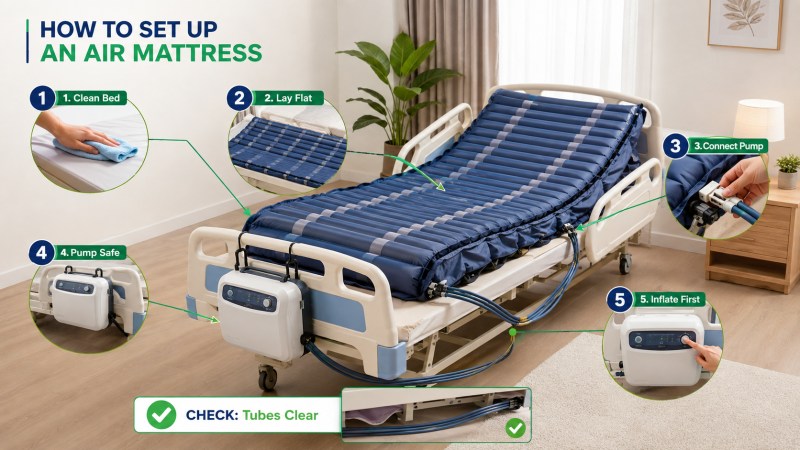
Setting up the mattress correctly is the first step to make sure it actually works the way it should. Follow this order:
- Clean the bed frame first – Wipe down the bed frame before placing the mattress on it. Dust or leftover moisture can damage the mattress from below.
- Lay the mattress flat – Spread it evenly on the bed frame. Check that there are no folds, twists or bunching, as this can block airflow and create uneven pressure points.
- Connect the pump properly – Attach the air tubes to the pump using the connectors given by the manufacturer. Make sure every connection is tight, otherwise air will leak out slowly.
- Place the pump safely – Keep the pump on a stable surface, or hang it using the hooks provided at the foot of the bed. Don’t let it rest on the floor where it can collect dust or moisture.
- Plug in and switch on – Connect to a proper power socket and turn the pump on. Give it a few minutes to fully inflate before placing the patient on it.
Quick check before use: Run your hand under the mattress to confirm no tube is bent, pinched, or trapped underneath. A blocked tube means uneven pressure, which defeats the purpose of the mattress.
Read Also: Why Renting Medical Equipment is a Smart Choice for Home Healthcare
Setting the Right Air Pressure:
Getting the pressure right matters as much as installing the mattress correctly. Wrong pressure means the mattress won’t protect the patient’s skin properly.
- Set the pressure based on the patient’s body weight — heavier patients usually need firmer settings, lighter patients need softer ones.
- The surface should feel firm, but not like a hard board.
- The patient’s body should not sink deep into the mattress.
The two-finger test: Slide your hand under the patient’s lower back or hip area. You should be able to fit two fingers comfortably between the patient’s body and the base of the bed. If you can’t slide your fingers in, the mattress is too soft. If there’s a big gap, it’s too firm.
Recheck the pressure whenever:
- The patient’s weight changes (gain or loss)
- The patient’s position on the bed changes
- You notice the patient shifting or feeling uncomfortable
Daily Care Routine for Bedridden Patients:
Using the mattress correctly is not a one-time job — it needs daily attention. Here’s a simple routine caregivers can follow:
| Task | How Often | What to Check |
| Pressure check | Once or twice a day | Mattress feels firm but patient doesn’t sink in |
| Skin check | Daily | Redness, sores, or irritation on hips, back, heels, shoulders |
| Repositioning | Every 2-3 hours (or as doctor advises) | Change patient’s lying position to relieve constant pressure points |
| Pump function | Daily | Chambers inflating and deflating properly, no unusual sound |
| Bedsheet check | Daily | Sheet is smooth, not bunched, doesn’t block airflow |
Why repositioning still matters: Even with a good air mattress, the patient’s position should be changed regularly if the doctor has advised it. The mattress reduces pressure, but it doesn’t fully replace the need for movement.
Tip: Keep a small daily log (even a notebook works) noting skin condition and any changes. This helps you catch problems early and also helps if you need to update the doctor.
Electrical and Pump Safety Tips:
Since the mattress runs on an electric pump, a few basic safety steps are important, especially because it stays switched on all day and night.
- Plug the pump directly into a wall socket; avoid using extension boards where possible.
- Keep the pump away from water, spills, or damp areas near the bed.
- Don’t overload the same socket with other heavy appliances.
- Switch off the pump before cleaning it or adjusting any connections.
- If you hear unusual noise, feel the pump getting hot, or notice air leaking, stop use and call your equipment provider immediately.
Covers, Hygiene, and Maintenance Considerations:
Keeping the mattress clean and dry with an effective covering may help you make daily care easier, as well as protecting the skin of the patient.
Simple steps to keep your mattress clean, dry, and comfortable:
- Use a fluid‑resistant and easy‑to‑clean covering
- Select waterproof but breathable material
- Check the mattress regularly for leaks and tears
- Follow cleaning instructions provided by the manufacturer
- Maintain the mattress in a dry condition to prevent skin breakdown
- Regularly check the pump, air pressure, and tubing for air mattresses
Budget and Where to Buy or Rent in India:
You can buy or rent a medical mattress from medical equipment stores, hospital‑supply dealers, or trusted online healthcare suppliers in India. If the mattress is only needed for a short period, renting may save you money. Before buying or renting a mattress for a hospital bed at home, compare prices, warranties, and service.
How Icosano Helps You Choose and Set Up the Right Mattress:
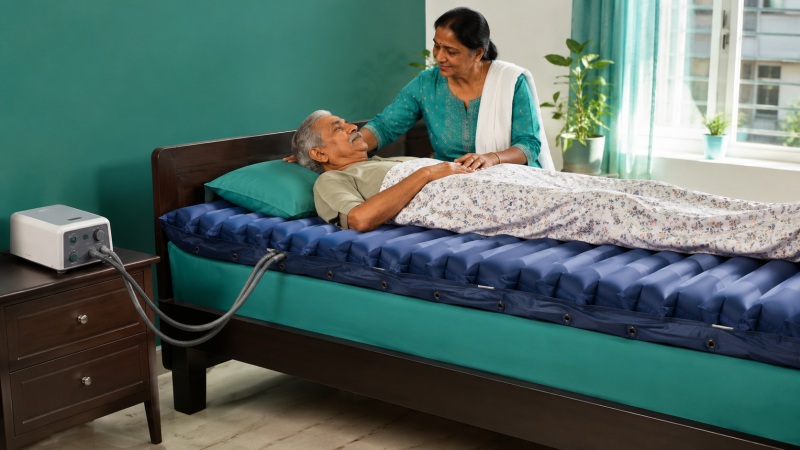
Icosano helps families in Kolkata find a suitable medical mattress for bedridden patients based on their care needs. From choosing the right mattress to understanding how to use it at home, their support can make the process simpler. This can help caregivers feel more confident when arranging comfortable and appropriate bed care for their loved ones.
Read Also: What Questions to Ask a Home Healthcare Agency
Conclusion: Making the Right Choice for Comfort and Safety
Choosing the right medical mattress can make everyday care more comfortable for a bedridden patient. Consider their mobility, skin condition, weight and time spent in bed. A suitable mattress, proper setup and regular cleaning can help support comfort and reduce pressure-related problems at home.
FAQs:
A medical air mattress for bedridden patients helps redistribute body pressure and may improve comfort for people who spend long hours in bed.
Place the air mattress on the hospital bed, connect the pump correctly, inflate it fully, and adjust the pressure according to the manufacturer’s instructions and patient needs.
Yes, you can use a bedsheet on an air mattress, but keep it smooth and loosely fitted so it does not restrict the air cells.
Lay the hospital bed air mattress flat, connect all air tubes firmly, place the pump safely, and check that there are no folds or blocked tubes.
Set the air pressure according to the patient’s weight and the manufacturer’s guidance. The mattress should support the patient without feeling excessively hard or too soft.
Check the patient’s skin daily for redness, irritation or pressure sores, especially around the hips, heels, shoulders, back and tailbone.
Measure the hospital bed dimensions carefully and select a mattress that fits the frame properly, without large gaps, overhanging edges or unsafe movement.