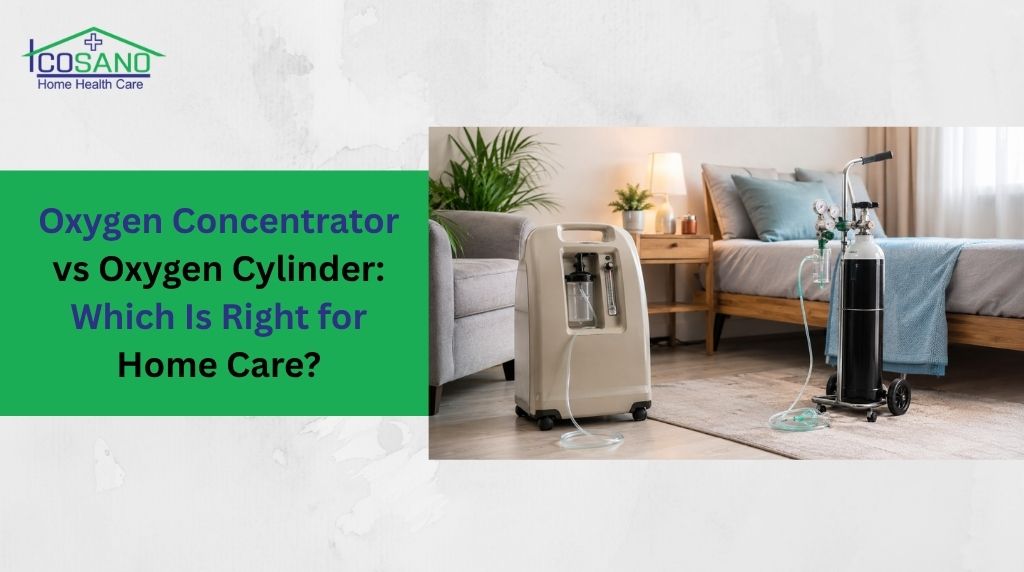
Living with a respiratory problem can make everyday life more challenging, especially when oxygen therapy is needed at home.
If someone in your family has been advised to use oxygen, you may think, “Do I have to go for a concentrator or a cylinder?”
The choice is not simply about picking one device over the other. It depends on the person’s oxygen needs, how often oxygen is required, daily routine and home environment.
Here, we explain difference between an oxygen concentrator and an oxygen cylinder to help you feel more prepared, choose practical support for home care and most importantly, follow your doctor’s recommendations safely.
If your loved one needs oxygen for many hours a day, over weeks or months, an oxygen concentrator is usually the more practical and reliable choice for home care. If oxygen is needed only occasionally, during a power cut, or in an emergency, an oxygen cylinder is the better fit. Many families end up using both together — a concentrator for daily use and a cylinder as backup.
What Is an Oxygen Concentrator?
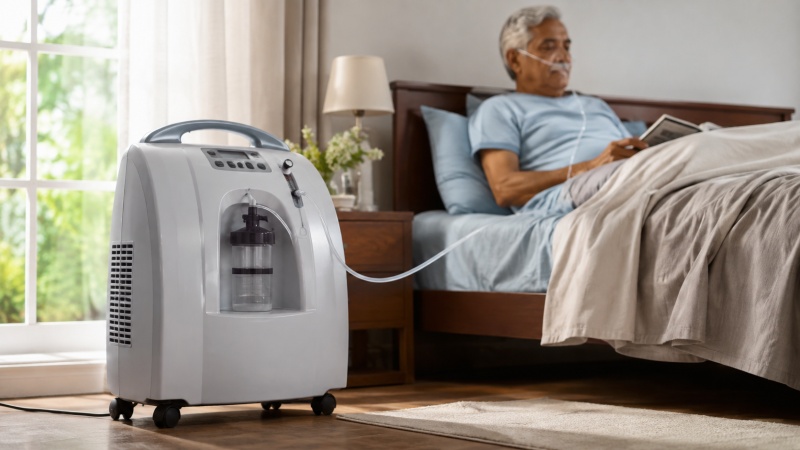
An oxygen concentrator for home use is a medical device that takes air from the room and separates oxygen from other gases. This extracted oxygen is delivered through the nasal cannula or the mask. It continuously supplies oxygen using an electrical power connection.
The major types of oxygen concentrators are:
- Stationary oxygen concentrators: Large-size machines that can be used by individuals at home on a routine basis. They are best when an individual requires oxygen for an extended period of time.
- Portable oxygen concentrators: Small-sized oxygen machines that are portable and can be carried by individuals requiring oxygen even during their travel.
Oxygen concentrators also differ in how they deliver oxygen:
- Continuous flow concentrators release oxygen steadily, at a fixed rate, whether the person is breathing in or out. This is the type most commonly prescribed for home use, especially for patients who need oxygen through the day and night.
- Pulse dose concentrators are smarter in how they work. They sense when the patient breathes in and release a small burst of oxygen exactly at that moment. This makes the machine more battery-efficient, which is why pulse dose units are common in portable concentrators meant for travel.
Your doctor will usually decide which delivery type suits the patient, based on their oxygen requirement and how active their daily routine is. It’s not something to choose on your own.
What Is an Oxygen Cylinder?
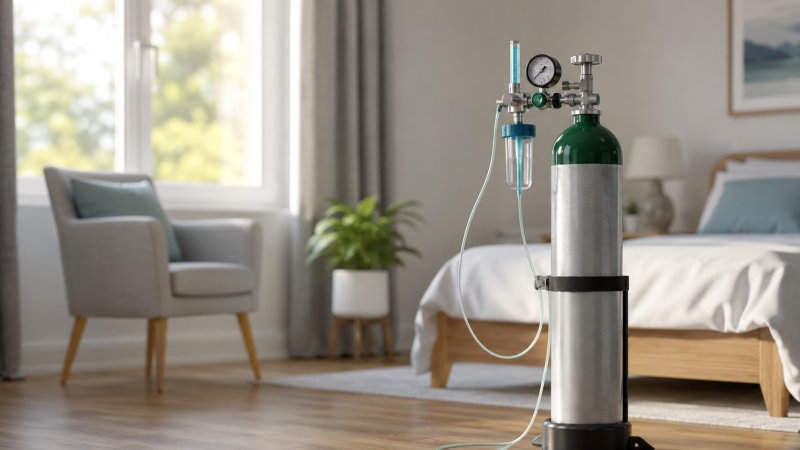
The oxygen cylinder for home care is a tank that holds compressed medical oxygen. It stores oxygen and supplies it as needed.
It is fitted with a regulator and flowmeter. The flowmeter regulates the flow of oxygen according to the recommendation by doctor.
It is available in various sizes of oxygen cylinders. Small cylinders are portable, and large cylinders offer a long-term supply of oxygen. Once the oxygen supply runs out, the cylinder should be refilled.
Read Also: Why Medical Equipment Rental Is Best for Home Healthcare
Oxygen Purity: How Much Oxygen Does Each Device Actually Give?
One thing families often forget to ask is: how pure is the oxygen coming out of the device?
Normal room air has only about 21% oxygen, the rest being mostly nitrogen. An oxygen concentrator pulls in this air, filters out the nitrogen, and delivers oxygen at around 90% to 95% purity — which is more than enough for most home oxygen therapy needs.
An oxygen cylinder, on the other hand, stores medical-grade oxygen that has already been compressed at a purity of nearly 99%. This is why cylinders are still preferred in situations where very high-purity oxygen is needed quickly, such as emergencies or hospital settings.
For most home-care patients using standard flow rates, both devices provide oxygen well within the range recommended by doctors. The purity difference matters more in specific medical situations, so it is best to let your treating doctor decide the right flow rate and purity requirement rather than assuming higher is always better.
Key Differences Between Oxygen Concentrator and Oxygen Cylinder:
When you look at the oxygen concentrator and oxygen cylinder, you notice both look similar, and both serve the same purpose: providing oxygen. But they differ in how they provide oxygen and their practical benefits.
Here we explain the difference between an oxygen concentrator and a cylinder and compare their key features:
| Factor | Oxygen Concentrator | Oxygen Cylinder |
| How it supplies oxygen | Takes in air from the room and increases oxygen concentration | Supplies oxygen that is already pressurised |
| Requirement of electricity | Does require electricity | Does not require electricity |
| Supplies oxygen | Keeps supplying oxygen until it stops working | Supplies oxygen only for the available oxygen supply |
| Re-filling | Does not require oxygen refilling | Normally requires refilling or replacement with use |
| Portability | Larger tanks may be heavier, but small ones are also available | Small tanks can be easier to carry |
| Power cut | Requires a battery or other power source to provide power | Can work during power cut |
| Long-term usage | Convenient for long-term oxygen treatment at home | Less convenient because it needs to be refilled on a regular basis |
| Flow control | The flow can be regulated through the device’s flow control | A regulator and flow meter regulate oxygen |
| Maintenance | Requires cleaning, maintenance of filters, and regular equipment check-ups | Needs proper storage, checking regulators, and timely refilling |
| Most suited for | Patients who are supposed to use oxygen on a continuous basis | Emergencies and situations without electricity |
Medical Conditions That May Require Oxygen Therapy at Home:
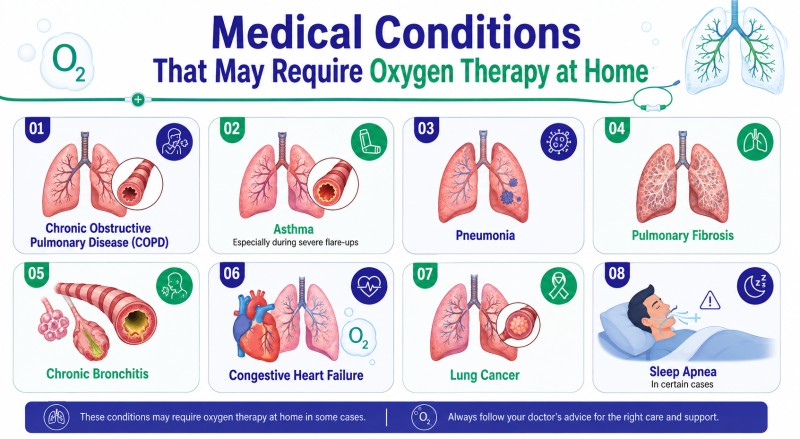
Oxygen therapy is not only for COVID-19 recovery — it has been used for many years to support patients with a range of health conditions. Some common conditions where a doctor may prescribe home oxygen include:
- Chronic Obstructive Pulmonary Disease (COPD)
- Asthma, especially during severe flare-ups
- Pneumonia
- Pulmonary fibrosis
- Chronic bronchitis
- Congestive heart failure
- Lung cancer
- Sleep apnea, in certain cases
If a family member has been diagnosed with any of these conditions, oxygen therapy at home may eventually become part of their care plan. In more severe cases, patients may also need round-the-clock monitoring and advanced critical care support at home alongside their oxygen therapy.
Cost Comparison: Oxygen Concentrator vs Oxygen Cylinder
| Cost Factor | Oxygen Concentrator | Oxygen Cylinder |
| Upfront price (5 LPM) | Rs 30,000 – Rs 60,000 | Rs 12,000 – Rs 18,000 (10L cylinder) |
| Upfront price (10 LPM / larger) | Rs 70,000 – Rs 1,20,000 | Rs 750 – Rs 33,135 (varies by size/material) |
| Portable option price | Rs 1,50,000 – Rs 2,75,000 | Rs 14,000 (4.6L portable cylinder) |
| Monthly rental | From Rs 3,500 (5 LPM), Rs 5,000 (10 LPM) | Not typically rented — usually bought or refilled |
| Ongoing running cost | Electricity: Rs 1,500 – Rs 3,000/month | Refill charges per cylinder (varies by city/vendor) |
| Refilling needed? | No | Yes, once oxygen runs out |
| Typical monthly cost for continuous daily use | Electricity only — comparatively lower | Rs 15,000 – Rs 30,000+ (refills + delivery, varies) |
Just like oxygen equipment, many families also prefer renting essential recovery equipment for home instead of buying it outright.
Which One Is Better for Long-Term Home Care?
For long-term home oxygen therapy, the choice depends on how much oxygen a person needs and how often it is required. In many cases, a concentrator can make regular home care simpler, especially when oxygen is needed for several hours each day.
For example, a 70-year-old man with severe COPD who has been prescribed oxygen for 15 hours a day. Families managing this kind of daily routine often also rely on trained caregivers to assist with daily health monitoring at home. His family needs to manage oxygen therapy every day, not just occasionally. A concentrator may be the better option in this case because it can provide oxygen for extended periods of time. Also, his family does not require frequent refills of the cylinders. This can make home care convenient for both him and his family.
An Indian study published in Lung India examined 97 people who were using oxygen concentrators for long-term oxygen therapy. It found that 45.36% used oxygen for at least 15 hours a day. This shows how important it is to choose an oxygen system that is practical and easy to use regularly at home.
When an Oxygen Cylinder Is Still Necessary?
An oxygen cylinder can be important when a person needs a reliable oxygen supply during situations where a concentrator may not be available.
For example, a patient recovering from severe pneumonia who needs oxygen at home but is also required to attend regular hospital appointments. During short trips between home and the hospital, carrying a suitable oxygen cylinder may be more practical than taking a stationary concentrator.
A cylinder may also be useful when:
- The concentrator stops working or needs servicing.
- Oxygen is needed during patient transport.
- A person requires oxygen for a short period.
- Immediate oxygen support is needed in an emergency.
Read Also: Types of Home Healthcare Services and Their Importance
Safety Comparison: Oxygen Concentrator vs Oxygen Cylinder
Beyond convenience and cost, safety is something every family should think through carefully before choosing home oxygen equipment.
Oxygen cylinders store oxygen under high pressure. This means they need to be handled with care — kept upright, secured so they cannot fall or roll, and stored away from direct heat, open flame, or smoking areas. A damaged regulator or a leaking valve can turn into a serious hazard, since oxygen-enriched air burns much more easily and intensely than normal air.
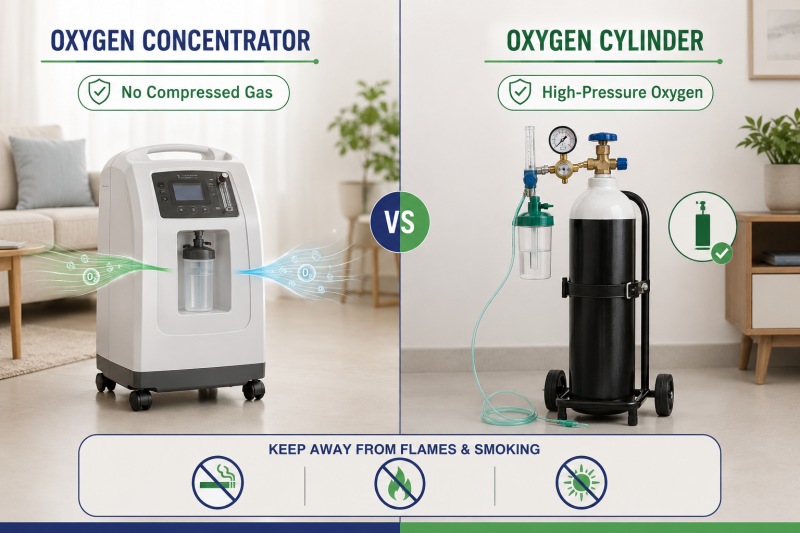
Oxygen concentrators are generally considered safer for everyday home use, mainly because they do not store any compressed gas. They simply draw in air, process it, and release oxygen as needed. That said, they are not risk-free — they should still be kept away from flames, oil-based creams, and smoking, and should be placed in a well-ventilated spot with nothing blocking the air vents.
A few simple safety habits go a long way for both devices:
- Never allow smoking or open flame anywhere near the device
- Keep the equipment away from heaters, stoves, and direct sunlight
- Store cylinders upright and secured, not lying loose
- Check tubing and connections regularly for leaks or wear
- Keep a fire extinguisher accessible in the room, as a precaution
Following these basics reduces risk significantly, whichever device your family chooses to use.
Why You May Need Both an Oxygen Concentrator and a Cylinder?
In some cases, the use of both the oxygen concentrator and the oxygen cylinder as backup may be a safer way of providing home oxygen therapy.
For example, an older individual with a certain respiratory condition who uses an oxygen concentrator daily. If there is a sudden power cut at home, the concentrator cannot continue working. Having an oxygen cylinder ready can help provide oxygen during the interruption until the regular power supply returns.
A 2013 study published in Respiratory Investigation surveyed 599 people receiving home oxygen therapy after a major earthquake in Japan. Oxygen cylinders were provided to 574 patients (95.8%) before their supply ran out. The findings show why having access to a backup oxygen supply can be important for people who depend on home oxygen therapy.
Conclusion & How Icosano Home Healthcare Can Help:
Choosing between an oxygen concentrator and an oxygen cylinder is not just about the equipment; it is about what works best for the patient’s daily needs.
At Icosano, we provide home oxygen equipment and support to help families manage respiratory care more comfortably. We can assist with choosing suitable oxygen equipment, home-care coordination and guidance on safe oxygen use based on the patient’s needs.
If you are unsure which option is right for your loved one, speak with a qualified healthcare professional before starting or changing oxygen therapy.
FAQs:
An oxygen concentrator for home use is often more convenient when oxygen is needed for many hours. An oxygen cylinder can be useful as a backup or for short-term use.
For long-term use, an oxygen concentrator for long-term oxygen therapy is often more practical because it does not need regular refilling. It does, however, require a reliable electricity supply.
Yes, an oxygen cylinder for home care can be used every day when prescribed by a doctor. However, families need to arrange refilling or replacement when the stored oxygen runs out.
Keeping a backup oxygen cylinder may be useful for patients who depend on oxygen regularly. It can provide temporary support during power failures, equipment problems or situations where the concentrator cannot be used.
An oxygen concentrator usually needs filter cleaning and routine servicing, while an oxygen cylinder needs proper storage, regulator checks and timely refilling. Both require regular safety checks at home.
A portable oxygen concentrator is designed for easier movement and travel, while smaller oxygen cylinders can also be carried. Portability depends on the patient’s oxygen prescription, device size and duration of use.
For frequent or long-term use, an oxygen concentrator may be more economical because it does not require repeated oxygen refills. A cylinder may involve ongoing refill and delivery expenses.
Oxygen concentrator rental can make sense when oxygen is needed temporarily, such as during recovery. Buying may be more practical when a patient is expected to need oxygen for a longer period.