What is recovery? Is it always about hospital rooms, medical machines, or long stays under constant supervision? No, recovery at home feels different. You rest in your own space, with your family. So, is it enough, or does it require other things too?
Along with family comfort, you also need safety, support, and the right medical tools.
An Indian study found that nearly 82% of bedridden patients are cared for by family members at home, highlighting the need for supportive home care solutions.
Patients who are recovering from surgery or any long-term health condition spend more time in bed.
But have you ever thought that a normal bed provides comfort and safety to your loved ones? No, this is where a hospital bed at home can help you.
But how do you choose a proper hospital bed for home care, and how does it make recovery at home smoother, safer, and more manageable?
Given these concerns, it is essential to understand the different types of hospital beds for home care and their uses to make the right choice.
What is a Hospital Bed for Home Use?
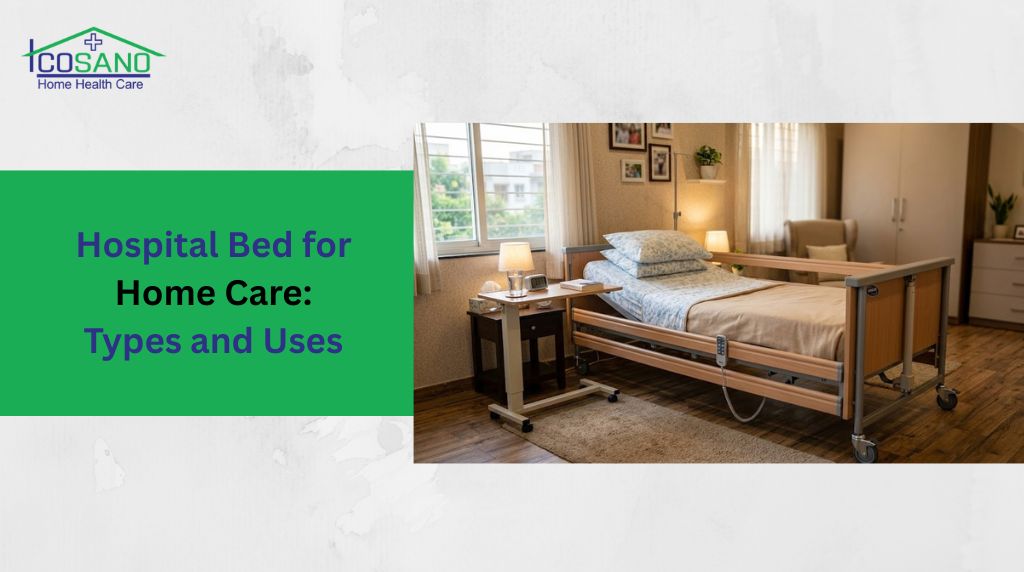
A medical bed for home use is just a specific type of bed that ensures your comfort and safety when you have to receive medical treatment at home.
Rising demand for patient care solutions has been evident in India’s hospital bed market, where an annual increase of about 8% is predicted. The nation boasts over 1.8 million hospital beds in its healthcare facilities, indicating the rising requirement for patient care.
This bed differs from an ordinary one in that it offers various adjustment options according to your health. It becomes much more convenient for you and your caregiver, who has to spend a lot of time at the bedside.
Read Also: Types of Home Healthcare Services and Their Importance
Types of Hospital Beds for Home Care:
A patient bed for home use is not only about sleep; it also involves comfort and support.
Different types of hospital beds depend on the patient’s health condition, mobility, and the availability of family members for support.
| Types of Bed | Features | Best for | Advantages/Disadvantages |
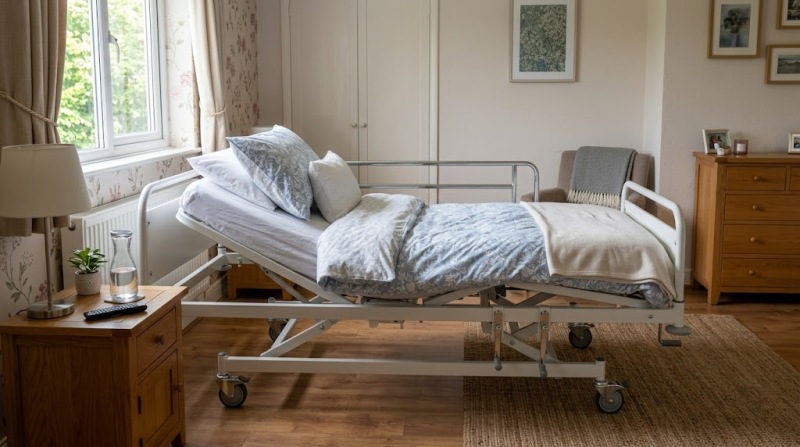
| Manual Fowler Bed (Semi Fowler) | Only the head side lifts up; used for patients who need head elevation at 30, 45, 60, or 90 degrees; toilet bed falls under this category and can be customised with basin and bath shower with plumber support | Patients with limited mobility who need head elevation; bedridden patients needing toilet facility in bed | Affordable and practical; toilet bed customisation adds hygiene convenience; additional plumber cost involved |
| Manual Fowler Bed (Full Fowler) | Both back and leg sides lift together; available in 3-function and 5-function variants; 5-function includes height adjustment; all operated manually | Patients needing full body positioning support during recovery or long-term care | Cost-effective; no electricity needed; caregiver effort required for adjustments |
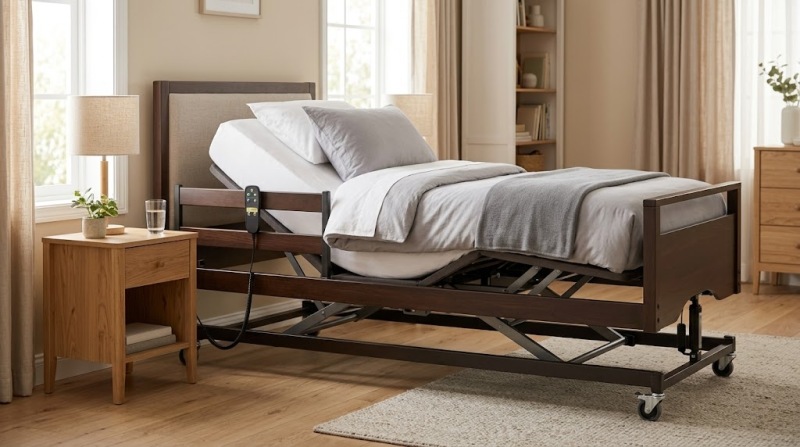
| Electric Bed / Fully Motorized Bed (2 Function) | Electrically operated back and leg lifting; remote panel is not fixed to the side rail so the patient can operate it independently during recovery | Patients in recovery who can partially manage themselves; home use where caregiver is not always present | Easy for patient to self-adjust; reduces caregiver dependency; more convenient than manual |
| Electric Bed / Fully Motorized Bed (5 Function) | Height adjustable plus Trendelenburg and reverse Trendelenburg tilting plus back and leg lifting; all electrically operated; Icosano beds are designed at lower height than standard hospital beds so patient can easily get down to floor and move to toilet or balcony independently | Long-term care patients; patients transitioning from bedridden to partial mobility | Maximum comfort and flexibility; patient-friendly low height design unique to Icosano; higher cost than manual beds |
| ICU Bed for Home | Features that provide additional support to monitor patients’ status | Intensive care patients | Provides special services at a relatively higher cost |
| Bed with Side Rails | The bed comes with protective side rails | Elderly patients and patients who tend to fall | Increases safety and decreases fall risk |
| Mobility Support Bed | Assists in improving the mobility of patients | Assists with rehabilitation and mobility | Enables easy transfer into and out of bed |
| Motorized Backrest (Space-Saving Option) | A motorized backrest unit that can be placed over an existing home bed; ideal where space is limited in small flats or houses | Patients living in small homes where a full hospital bed cannot fit | Practical space-saving solution; no need to replace existing bed; good for partial support needs |
Understanding different patient bed types can help families choose the most suitable option for home care.
Renting vs. Buying a Hospital Bed: Which One Is Right for You?
This is one of the most common questions Indian families ask, and very few people give a clear answer. The truth is, it depends on how long the patient needs the bed and what your budget looks like.
| Factor | Renting | Buying |
| Short-term recovery (1–3 months) | Better and more affordable choice | Too costly for short use |
| Long-term care (6 months or more) | Gets expensive over time | Worth the investment |
| Maintenance and repairs | Usually handled by the provider | Your own responsibility |
| Flexibility | Easy to return when no longer needed | Need to resell or store |
| Upfront cost | Low | Higher one-time payment |
| Customisation | Limited to available stock | Choose exactly what you need |
If your loved one is recovering from surgery and will likely be mobile in 2 to 3 months, renting is the smarter choice. But if the condition is long-term, such as paralysis or advanced age with limited mobility, buying a good quality bed saves money in the long run. Always ask your home care provider about both options before deciding.
Key Features to Look for in a Home Care Hospital Bed:
When you choose a hospital bed for home care, think about how it helps make your daily life easier for you and your family, too.
Here are some key features that you look for in a home care hospital bed:
- Adjustable height and positions: This feature makes it possible for the patient to raise themselves from lying to a sitting position.
- Mattress compatibility: A proper mattress increases comfort and support, particularly for those patients who spend much time lying down.
- Safety side rails: Reduce the risk of falling out of bed and provide increased support when shifting positions.
- Wheel locks and mobility: A good bed with wheels is easy to move and secure with locking systems.
- Remote control functions: Allows easy repositioning of the beds with minimal effort.
- Weight capacity: The bed must be able to support the patient’s body weight.
- Easy cleaning and maintenance: Materials that are easy to clean can help ensure proper hygiene.
Read Also: Is Home Healthcare Cheaper Than Hospital Care? Cost Comparison & Benefits Explained
Uses of Hospital Beds in Home Care:
Hospital beds at home are made to support many healthcare needs. From short-term recovery after surgery to long-term care, these beds make caregiving easier for your family.
1. Post-Surgery Recovery:
Rest and minimal body movements may be essential for patients undergoing surgical operations during recovery. The hospital bed improves the patient’s head and limb positioning. Also, ensuring less pain, increased blood flow, and an overall speedy recovery.
2. Elderly Care:
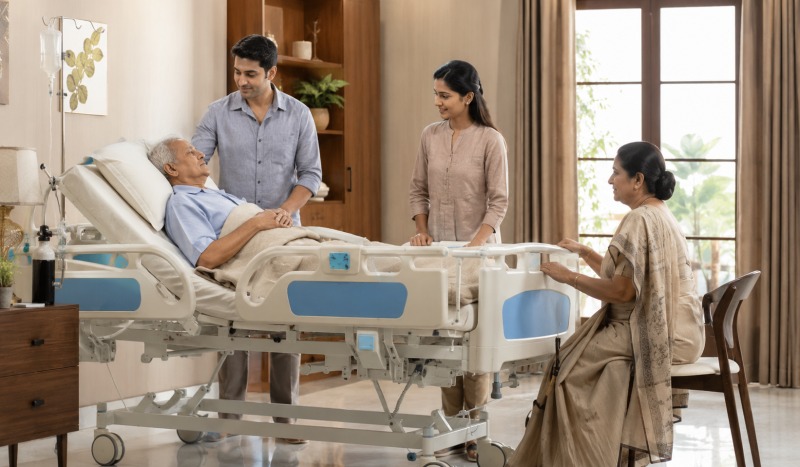
Mobility problems are common among many elderly people and make it hard for them to perform various tasks. The hospital bed for elderly people in their homes makes life easier and safer, as well as helps to minimize the chances of getting injured.
3. Chronic Illness and Long-Term Care:
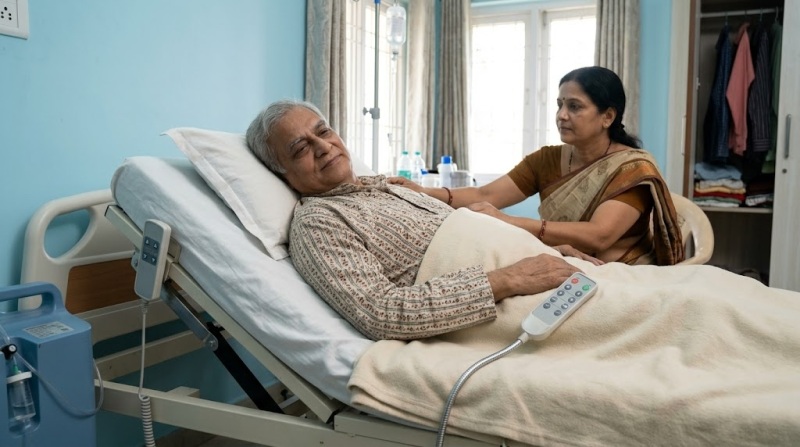
Individuals who suffer from chronic diseases such as congestive heart failure (CHF), chronic obstructive pulmonary disease (COPD), paralysis, arthritis, or neurodegenerative diseases can be bedridden for extended periods.
Bedsore Prevention: Something Most People Miss
When a patient stays in bed for many hours or days, one of the biggest risks is bedsores, also called pressure ulcers. These are painful wounds that form when constant pressure cuts off blood flow to the skin. In India, this is a very common problem for bedridden patients at home, but many families do not know how to prevent it.
A good hospital bed plays a big role in reducing this risk. Adjustable positions allow you to shift the patient’s body regularly, which relieves pressure from the same spots. Some beds also support special pressure-relief mattresses that further protect the skin.
Here is what helps prevent bedsores:
- Choose an adjustable hospital bed that allows easy repositioning every 2 hours
- Use an air mattress, foam mattress, or water mattress depending on the patient’s condition
- Keep the skin clean and dry at all times
- Check the back, hips, heels, and shoulders regularly for any redness or soreness
- Ask your doctor or home care nurse to guide you on turning techniques for bedridden patients
Do not ignore this. Bedsores can become serious infections if not caught early. The right bed and the right mattress together make a big difference.
Read Also: Challenges in Home Healthcare and Practical Solutions for Families
Benefits of Using Hospital Beds at Home:
Daily care becomes easier when patients have better support for movement, rest, and overall comfort. The following are the benefits of using hospital beds at home:
- Better comfort with adjustable positions for resting or sitting
- Safer care with side rails and a stable design
- Easier movement when getting in or out of bed
- Less strain for caregivers during daily tasks
- Improved sleep with proper body support
- More comfort during recovery and treatment
- Better quality of life for both patients and family
Useful Accessories to Use Alongside a Home Hospital Bed:
A hospital bed works even better when you pair it with the right accessories. These small additions can make a big difference in comfort, safety, and convenience.
- Overbed table: Helps the patient eat, read, use a phone, or do light activities while lying or sitting in bed. Very useful for long-term patients.
- Trapeze bar: A hanging bar fixed above the bed that allows patients to pull themselves up or reposition without fully depending on the caregiver.
- Pressure-relief mattress: Air, foam, or water mattresses designed to reduce bedsore risk for patients who spend long hours in bed.
- Bed rails and grab bars: Extra support for patients to hold while changing positions or getting out of bed.
- IV stand: Useful for patients receiving home-based intravenous medication or fluids.
- Bedside organiser: A hanging pouch or tray to keep medicines, remote controls, tissues, and other small items close by.
- Urinal bag and hygiene support products: For patients with limited mobility, proper hygiene products reduce discomfort and infection risk.
Ask your home healthcare provider which accessories are most suitable based on your loved one’s condition.
Read Also: Why Home Healthcare Is Growing: Trends, Demand, and the Future of Patient Care
How to Choose the Right Hospital Bed for Home Care:
All patients have varied needs when it comes to their treatment. Therefore, choosing a hospital bed should be based on the patient’s level of comfort and need for daily assistance, not just features.
Consider the following points before making a decision:
- Consider the health status and mobility of your dear one and choose whether for their recovery or for short or long-term care.
- Choose a manual or electric bed based on which is more comfortable.
- Check the space at home so the bed fits well and can be moved easily.
- Consider your financial situation when choosing a bed.
- Consider all the necessary safety and comfort options, such as side rails and comfortable mattresses.
- Consult with your doctor if you need extra guidance.
Home healthcare services providers, such as Icosano in Kolkata, specialize in offering home health care products for families to build better care environments at home.
FAQs:
The different types of hospital beds include manual fowler beds (semi and full fowler), fully electric motorized beds, ICU beds for home, toilet beds, and mobility support beds. Each type is designed for a specific patient condition and care requirement.
For hospital bed for home use, you can choose from manual fowler beds, 2-function electric beds, 5-function electric beds, toilet beds, and even a motorized backrest for small spaces. Renting or buying options are also available based on your budget and care duration.
A 5 function hospital bed offers five adjustments including height adjustment, back lifting, leg lifting, Trendelenburg tilting, and reverse Trendelenburg tilting. It is fully motorized and best suited for long-term bedridden patients who need maximum positioning support at home.
A standard home care hospital bed is usually 36 inches wide and 80 inches long. However, customized height options are available based on the patient’s needs. Always measure your room doorway and floor space before ordering a patient bed for home.
A full fowler hospital bed with side rails and adjustable height is the best choice for elderly patients at home. It allows safe and easy movement, reduces fall risk, and supports daily activities like sitting up or getting down to the floor independently.
Along with your home care bed, useful accessories include an overbed table, trapeze bar, pressure-relief mattress, IV stand, bed rails, and a bedside organiser. These accessories make daily patient care at home more comfortable and reduce the physical burden on the caregiver significantly.