
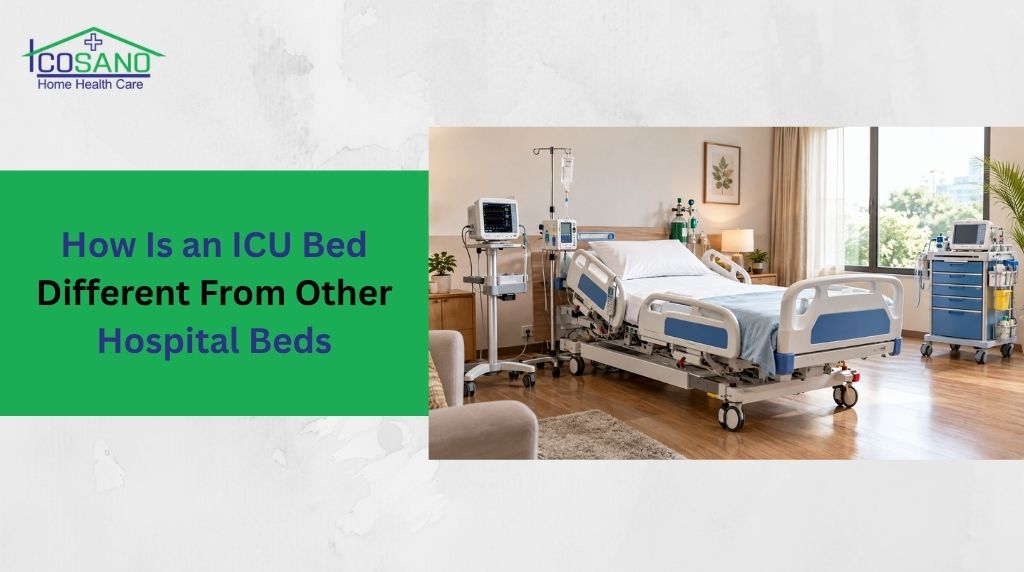
When you look at beds in hospitals, you may think they are all the same. But if you look closely, you may notice design differences, especially in the intensive care unit (ICU).
But why are ICU beds different from regular hospital beds?
If both are meant to keep a patient comfortable, why can’t one type of bed be used everywhere?
The answer is closely connected to the types of care a patient may need during a hospital stay. What may look like a small difference can actually have an important purpose.
In this guide, we take a closer look at ICU beds vs. hospital beds and what sets them apart.
What Is an ICU Bed?
An ICU bed (Intensive Care Unit Bed) is a hospital bed designed for critically ill patients who require intensive care.

Using this type of bed makes it easier for medical professionals to attend to the patient’s requirements. It can also support patients throughout treatment and monitoring, as well as during emergencies that may arise.
Types of ICU beds are:
- Manual ICU bed
- Semi-electric ICU bed
- Fully electric ICU bed
The type of bed used depends on the procedures needed for treatment.
Read Also: Hospital Bed for Home Care: Types and Uses
What Is a Standard Hospital Bed?
The standard hospital bed is the type of bed that you are most likely to find in the ward of a general hospital. It is designed for patients who require medical treatment but are not seriously ill and can manage without intensive care.

These beds are mainly used for rest, recovery and routine care. They also make it easier for staff to provide treatment and help patients when needed.
These beds are available as manually operated, while others are electrically controlled. A semi-Fowler bed is another option that helps patients sit up more comfortably.
Read Also: Benefits of Home Healthcare: Safe, Personalized Care at Your Doorstep
ICU Bed vs Standard Hospital Bed:
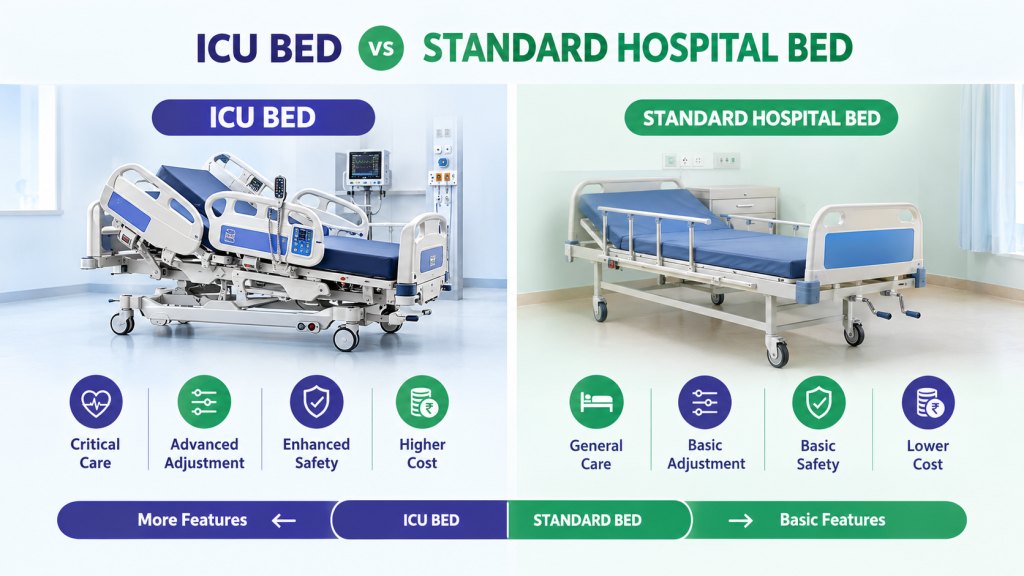
Here, this table shows a simple comparison between an ICU bed and a hospital bed:
| Feature | ICU Bed | Standard Hospital Bed |
| Primary use | Intensive care | General hospital use |
| Patient | Critical illness | Stable or recovering |
| Adjustability | Several motorised positions and height control | Basic adjustability, manual or electric |
| Safety | More advanced safety features | Basic safety features |
| Cost | More expensive | Cheaper |
Read Also: How to Choose the Right Hospital Bed for Home Use
Is an Electric Hospital Bed the Same as an ICU Bed?
No. An electric hospital bed is not automatically an ICU bed. An electric bed mainly uses powered controls to adjust the bed’s height or patient position. An ICU bed is designed for critical care and may include additional features such as CPR positioning, Trendelenburg and reverse Trendelenburg, lateral tilt, equipment support and other functions, depending on the model. The WHO also lists an electric hospital bed as ICU equipment for supporting critically ill patients and carrying essential equipment during care.
Build Quality and Frame Strength:
The difference between an ICU bed vs regular bed can also be seen in how each one is built.
An ICU bed should be built for continuous use, so it should use strong, durable materials. ICU beds have heavy, strong frames that support position changes and meet the needs of critically ill patients. Some ICU bed models also include expandable frames that can give extra space when needed.
Standard hospital beds are designed for general care in hospital wards. These beds are strong enough to support patients during their hospital stay, but their frame construction is simpler than ICU beds.
Electric Adjustability and Positioning:
Positioning can also affect breathing. A 2018 review in the Annals of Translational Medicine found that body position can affect breathing and oxygen levels in mechanically ventilated ICU patients.
ICU beds make it easier for healthcare staff to change a patient’s position when needed. The height of the bed can be raised or lowered depending on the needs of the patient.
Moreover, the bed can be placed in:
- Fowler position: With upper body elevated
- Trendelenburg position: With head low
- Reverse Trendelenburg position: With legs elevated
Standard hospital beds usually have limited adjustment options and require more manual work.
Read Also: Oxygen Concentrator vs Oxygen Cylinder: Which Is Best for Home Care?
Life Support and Medical Equipment Integration:
ICU beds are built to work with the medical equipment used by critically ill patients.
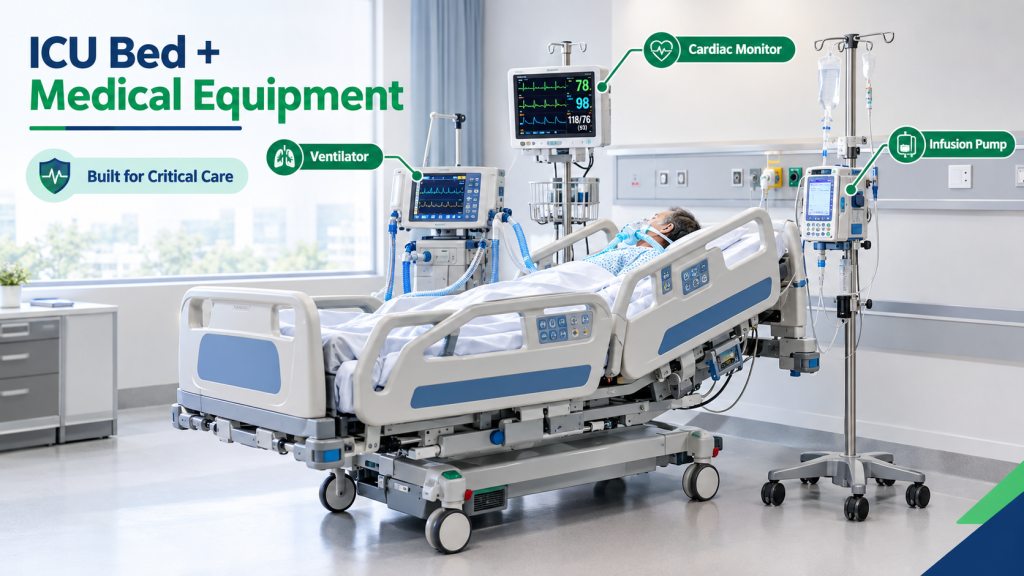
For this, these beds have places for the following medical equipment:
- Ventilator attachment
- Cardiac monitor attachment
- Infusion pump attachment
Other equipment poles can also be fitted to keep important medical equipment within easy reach of both patients and medical professionals. This helps medical professionals examine patients and provide treatment more easily.
Regular hospital beds may also hold advanced medical equipment; however, they usually have fewer built-in supports and accessories than ICUs.
Read Also: Why Renting Medical Equipment is a Smart Choice for Home Healthcare
Pressure Relief Mattress Technology:
A study of 671 ICU patients found that 10% had pressure injuries, showing why pressure-relieving mattresses are important in intensive care.
Extended periods of lying in bed, particularly for those who are critically ill and unable to move, can lead to the development of bedsores. For this reason, preventing pressure ulcers is an important part of ICU care. An alternating pressure mattress can help to spread the patient’s weight evenly in order to relieve pressure from affected body parts.
Normal hospital beds may use standard mattresses that do not offer the same level of pressure relief as the specialised mattresses used for some ICU patients.
Safety Features and Patient Monitoring:
Keeping patients safe is an important part of hospital care. ICU beds have features such as adjustable side rails, lower bed-height settings, and bed-exit alarms on some models. ICU bed wheels have brakes that keep the bed steadier.
Standard hospital beds feature side rails and brakes for preventing accidents and providing stability, but they do not have as many safety and monitoring features as the beds in the ICU.
CPR Function and Emergency Mobility:
An ICU bed may include a CPR release function that allows the backrest of the bed to be quickly lowered to allow the patient to lie flat during CPR. This helps medical personnel to initiate delivery of compressions during emergencies.
A regular hospital bed does not have this quick-release feature. This type of bed is primarily designed for less severely ill patients, so it is not likely to be useful for urgent care.
Why These Differences Matter for Patient Recovery:
ICU and standard beds are designed for different levels of medical support. A person in intensive care may need frequent repositioning, close observation and quick access to treatment equipment. In a general ward, a stable person usually needs a comfortable and supportive place to rest while receiving routine treatment.
The ICU bed vs standard bed difference becomes important when choosing the right setup for each level of care.
Setting Up ICU-Level Care at Home:

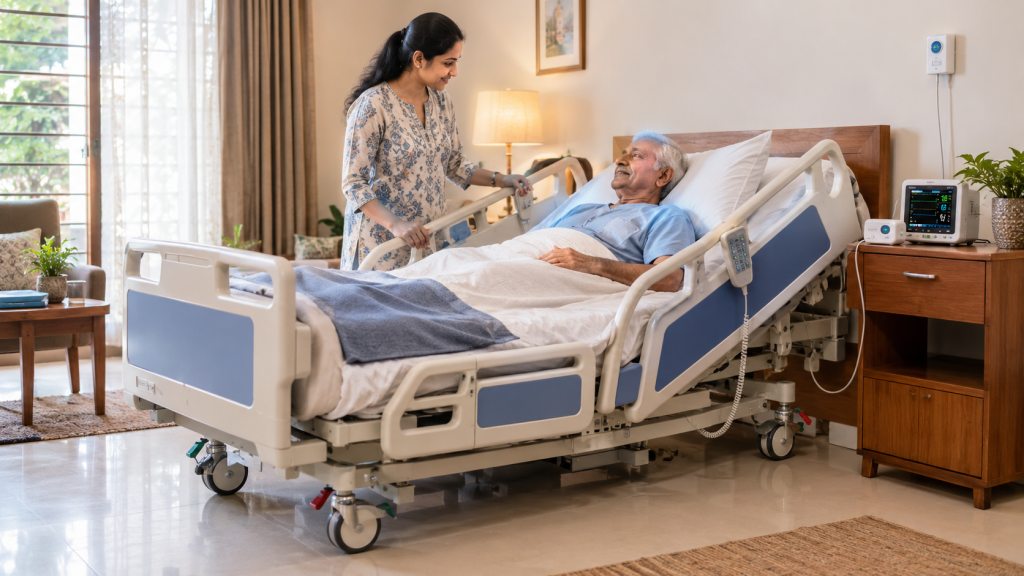
If you are planning to care for a patient at home after discharge, choosing the right bed can make everyday care much easier.
At Icosano Home Healthcare Private Limited in Kolkata, families can find hospital-style beds suited to their patient’s needs. However, a home bed cannot replace an ICU. A healthcare professional should guide the choice, especially when the patient needs special equipment or regular medical support.
Conclusion:
ICU and standard hospital beds may look similar, but they serve different purposes. An ICU bed is built for patients who need intensive care, while a standard bed is meant for more stable patients. Choosing the right bed can make a patient’s recovery more comfortable and make everyday care easier for both the patient and healthcare staff.
FAQs:
An ICU bed is designed for critically ill patients and provides advanced positioning, safety, emergency, and equipment-support features that are usually limited in standard hospital beds.
An ICU bed vs standard hospital bed comparison mainly differs in adjustability, monitoring support, emergency access, safety features, frame strength, and suitability for patients needing intensive medical care.
Yes, ICU beds have more adjustment options, including height changes, backrest movement, leg positioning, and emergency positions, helping healthcare staff manage critically ill patients more efficiently.
An electric ICU bed can help healthcare staff change patient positions quickly using controls, reducing manual effort and making frequent repositioning easier during critical care.
No. ICU bed features can vary depending on the model, manufacturer and level of care required. Some ICU beds may have basic electric positioning, while advanced models may include features such as CPR release, Trendelenburg positioning, integrated weighing, lateral tilt or X-ray-compatible sections. Therefore, the right ICU bed should be selected based on the patient’s needs and the type of care being provided.
A standard hospital bed may not provide all the positioning, emergency access and equipment-support features that may be required for critically ill patients. ICU beds are designed to support intensive care by allowing easier patient positioning, access to the patient and accommodation of equipment used during critical care. The appropriate bed depends on the patient’s condition and the requirements of the ICU.