When you or your family members need continuous medical care, is hospital care the only option?
No. Nowadays, you can get medical care at your own home through home healthcare services.
But how do these services help if patients have long-term health conditions and require continuous medical attention?
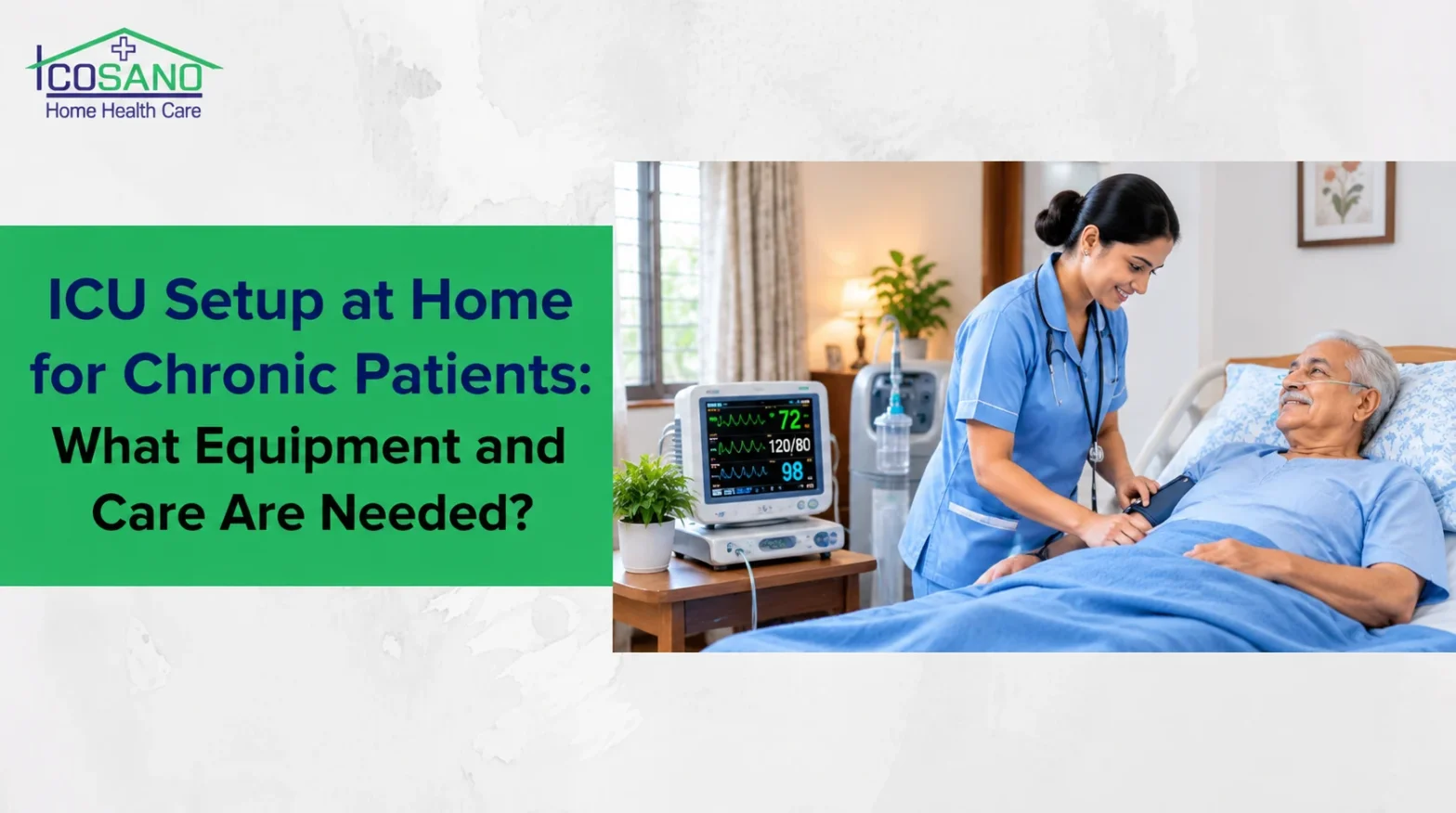
ICU setup at home is one of the home healthcare services that can bring specialized medical equipment, monitoring facilities and trained healthcare professionals into your home.
So, let’s understand what an ICU setup at home is and what equipment, medical support, and nursing care are needed to provide safe and effective care for patients with chronic conditions.
What is ICU setup at Home?
ICU setup at home refers to the setting up of all important medical services, such as ICU machinery, along with healthcare professionals in your home.
But many Indian families have wondered how an ICU setup at home is different from a hospital ICU. Let’s understand this difference in simple terms.
For example, imagine your father suffers from a long-term respiratory disorder. Oxygen therapy, along with nursing, is required for him. The doctor may advise ICU care in this case, and you need to arrange all important equipment and a nurse so that your father can get his treatment in the comfort of his own home.
Now, consider another situation where your father has trouble breathing, and emergency medical treatment is needed. Here, hospital ICU care may be required due to advanced machinery and an experienced emergency team.
Read Also: Home Health Care vs Hospital Care: Which Option Is Right for Your Family?
A 2016 review found that around 80% of family caregivers would choose home ventilation again for their loved ones, highlighting the value of family support in long-term care.
Which Patients May Benefit from ICU Care at Home?
ICU care at home is beneficial for patients who may need continuous medical support but do not require immediate hospital-based treatment.
Based on your doctor’s evaluation, there may be a need for home ICU for the following types of patients:
| Patient Type | Reason for Needing Home ICU Care |
| Recovery patients from an ICU admission | They require constant monitoring, medication, and nursing care post-hospital discharge. |
| Patients with chronic respiratory diseases | They require oxygen, BiPAP, or ventilatory support. |
| Neurological disease patients | They require help with breathing, movement, and other activities due to a stroke or spinal cord injury. |
| Advanced or terminal illness patients | They require palliative care, pain management, and other medical support at home. |
| Patients recovering from organ transplant surgery | They need monitoring, medication, and nursing help while recovering. |
Read Also: Home Care After Knee Replacement Surgery: Tips for Recovery
Did you know?
A 2021 review of 9 clinical trials that involved 959 patients who had chronic diseases found that hospital-at-home care was linked to a 26% lower risk of hospital readmission compared with hospital-based care.
Essential Medical Equipment Required for an ICU Setup at Home
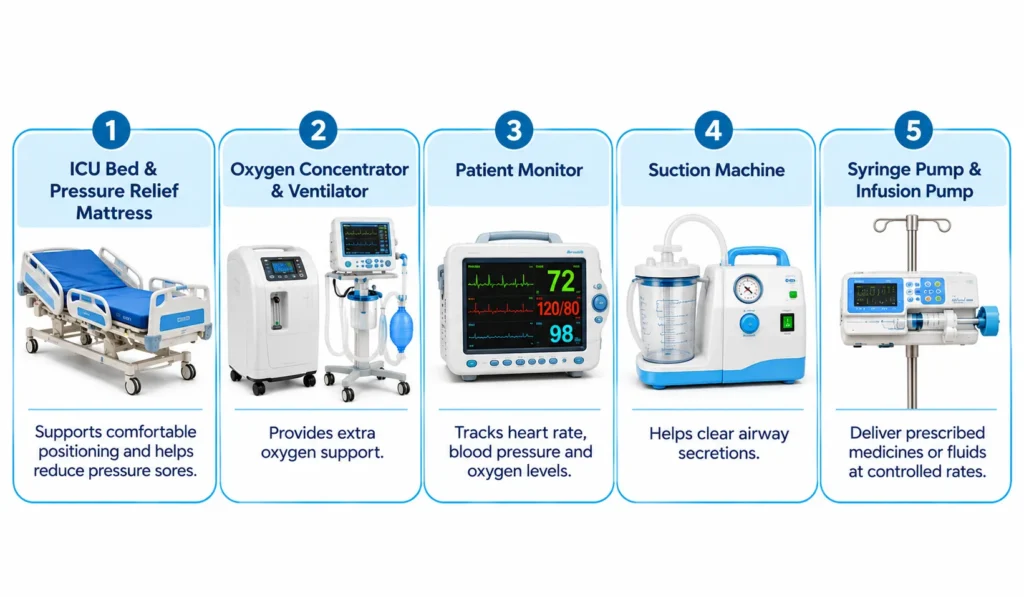
When setting up an ICU at home, you may require the following essential medical equipment:
1. ICU Bed and Pressure Relief Mattress
ICU beds with adjustable features help you change your loved one’s position easily. Some patients may need more bed time; pressure-relief mattresses are useful in these cases. This may reduce pressure on the skin and reduce the risk of bedsores.
2. Oxygen Concentrator and Ventilator
Oxygen concentrators give extra oxygen support to your loved one. But if they have a chronic lung condition, you may require a portable home ventilator on rent or a BiPAP machine to support their breathing.
3. Patient Monitor for Home Care
Patient monitor devices monitor your loved one’s heart rate, blood pressure, and oxygen levels. You or a healthcare professional can easily track these findings.
4. Suction Machine at Home
If your loved one has a tracheostomy or has difficulty clearing airway secretions, a suction machine can clear any mucus or secretions so they can breathe easily.
5. Syringe Pump and Infusion Pump
Some patients may require continuous medication; for these patients, a syringe pump and an infusion pump are useful. These devices deliver prescribed medicines or fluids at controlled rates.
Read Also: How to Choose the Right Medical Equipment for Home Care
Medical and Nursing Support Needed for Safe ICU Care at Home
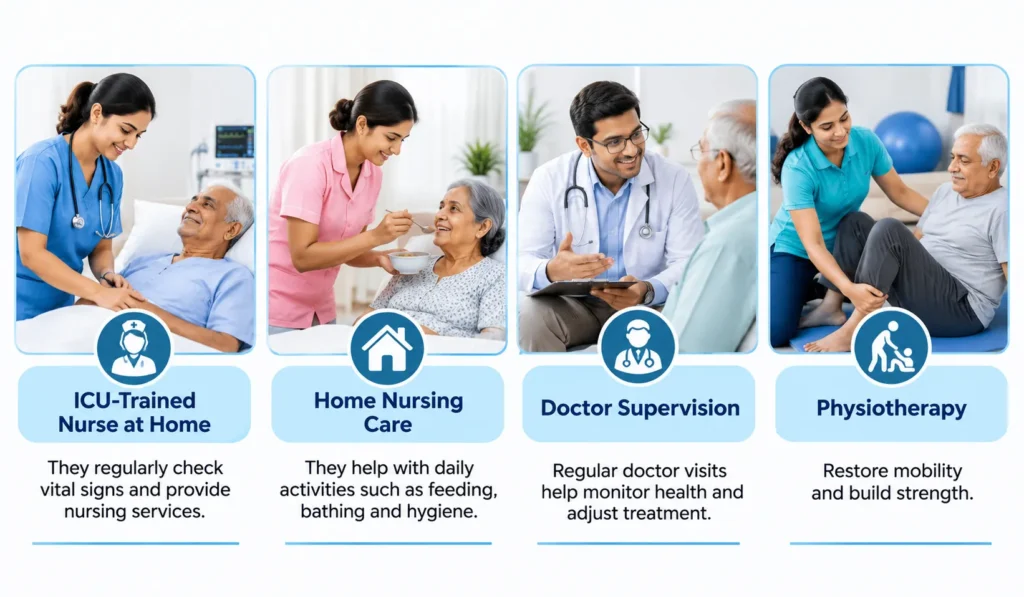
Only medical equipment can not provide proper ICU care. Your loved one may need a trained healthcare professional to help with medical care and daily needs.
These include:
- ICU-trained nurse at Home: They regularly check vital signs of patients, give them medicine on time and provide nursing services.
- Home nursing care: They help with daily activities such as feeding, bathing, and hygiene maintenance.
- Doctor supervision: Regular doctor visits are useful to track your loved one’s health condition and changes in the treatment plan if needed.
- Physiotherapy: Restore your loved one’s mobility and build strength.
Read Also: What Are the Benefits of Physiotherapy at Home? A Complete Guide
Steps to Prepare Your Home for an ICU Setup
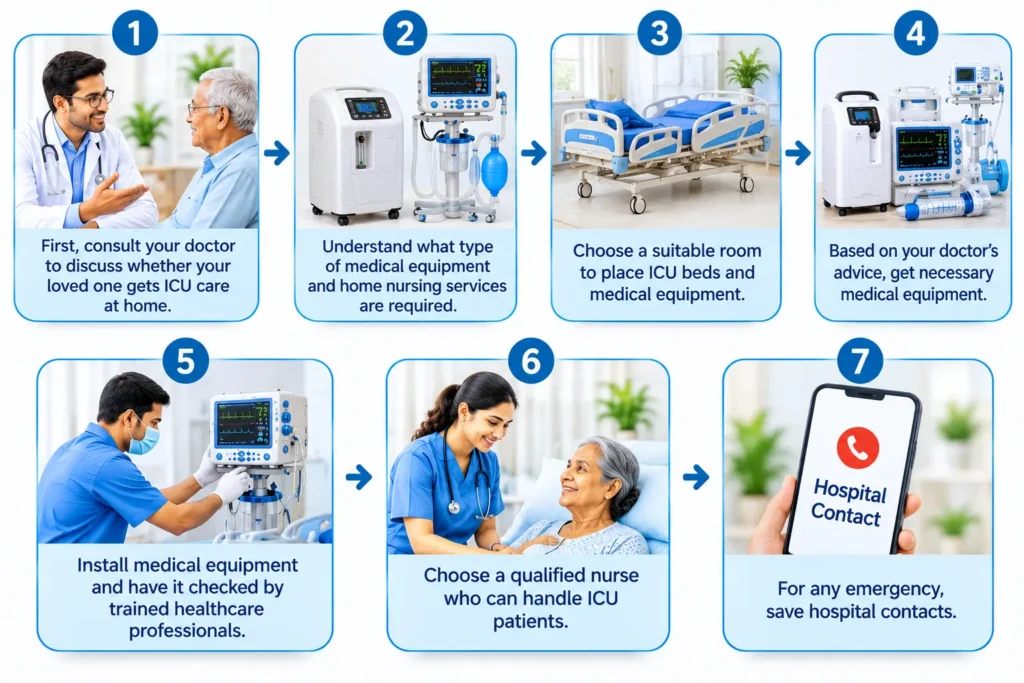
Before setting up the ICU at home, here are some steps that you can follow to ensure your loved one gets comfortable medical care at home:
- First, consult your doctor to discuss whether your loved one gets ICU care at home.
- Understand what type of medical equipment and home nursing services are required.
- Choose a suitable room to place ICU beds and medical equipment.
- Based on your doctor’s advice, get necessary medical equipment.
- Install medical equipment and have it checked by trained healthcare professionals.
- Choose a qualified nurse who can handle ICU patients.
- For any emergency, save hospital contacts.
How Much Does an ICU Setup at Home Cost in India?
The ICU setup at home cost in India depends on which type of medical care your loved one needs. If you need the equipment for a short period, you can consider an oxygen concentrator on rent instead of buying one. ICU bed on rent at home or a ventilator may also help manage the initial expenses.
Other than medical equipment, the following are additional charges:
- Nursing and attendant charges
- Doctor visits
- Equipment maintenance
- Medical supplies
Also, the total cost of ICU setup at home depends on your city, how much equipment is required, your loved one’s condition and how long home ICU care is needed.
Essential Safety Precautions for Managing a Home ICU
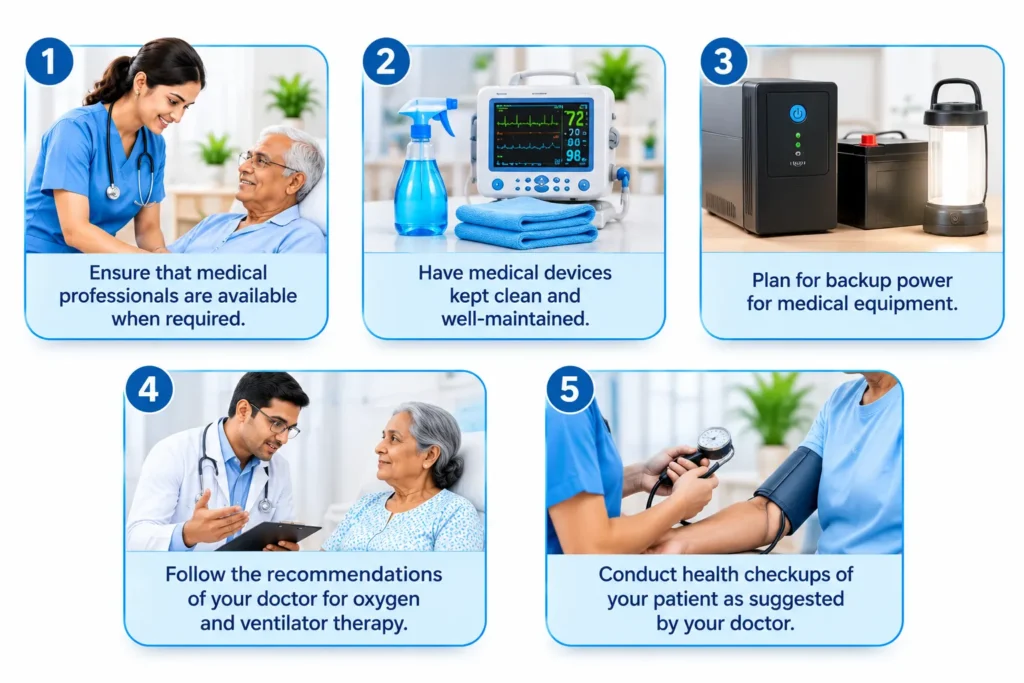
Here are some essential safety precautions you should keep in mind:
- Ensure that medical professionals are available when required.
- Have medical devices kept clean and well-maintained.
- Plan for backup power for medical equipment.
- Follow the recommendations of your doctor for oxygen and ventilator therapy.
- Conduct health checkups of your patient as suggested by your doctor.
Final Thoughts: Providing Safe and Comfortable ICU Care at Home for Your Loved Ones
Taking care of a family member with consistent medical requirements may not be easy for any family. With the right medical equipment, nurses and proper directions from doctors, one can easily ensure safety and comfort in their homes.
Icosano Home Health Care PVT Ltd, in Kolkata, offers home healthcare solutions to patients requiring medical attention in the comfort of their own home.