
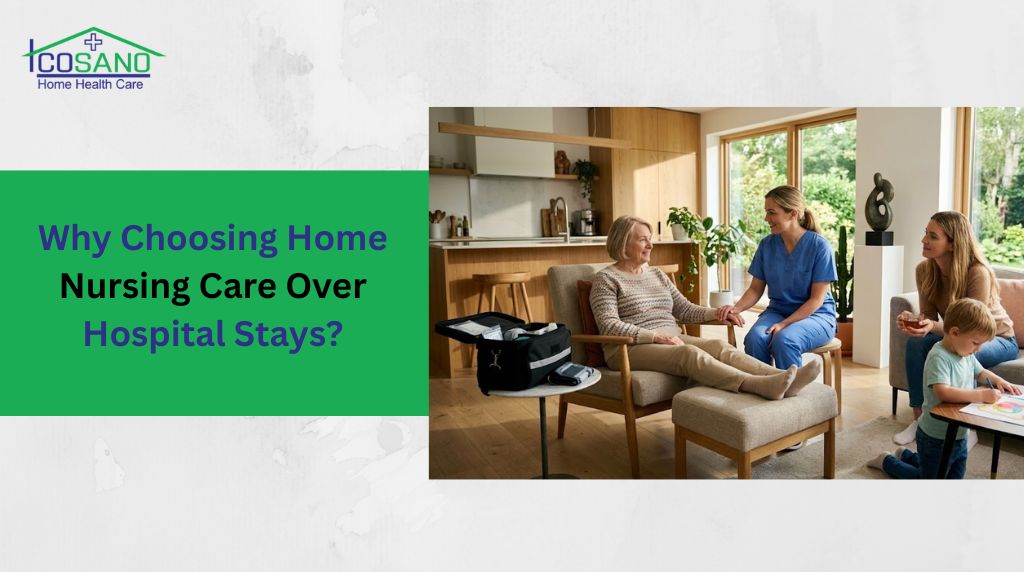
After spending days in a hospital, what do most patients ask first: “When can I go home?” Home is where patients feel safe, sleep better, and find comfort in a familiar environment.
Also, nowadays, families are learning that quality care is not only about being in a hospital room. With home healthcare services now easier to access in India, patients can get professional care at home instead of spending extra days in the hospital.
This is where home nursing care can help. Patients receive professional medical support while recovering in the comfort of their own homes. That is why many Indian families now prefer home nursing care instead of long hospital stays.
This article helps you understand the difference between home nursing vs hospital care, helping you choose the right recovery option for your loved one.
Home Nursing vs Hospital Care: Understanding the Key Differences
Many families are often confused: Is home nursing better than hospital care? The answer depends on the patient’s condition, recovery needs, and the level of medical support required.
The table below shows the differences between home nursing care and hospital care.
| Home Nursing | Hospital Care |
| Recovery occurs in a familiar environment | Recovery is done in a clinical hospital setting |
| Patients get personal nursing care from a nurse | Nurses normally attend to several patients at once |
| Family can be involved in daily care | Family cannot be involved in daily care due to limited visiting hours and hospital policies |
| Reduced chances of acquiring hospital-related infections | Increased risks of acquiring hospital-related infections |
| Better for long-term recovery and elderly patients | Best for emergencies and critical cases |
| Generally less expensive compared to hospital care | More expensive due to long periods in hospitals |
How Recovery at Home After Hospitalization Supports Better Patient Comfort:
After a hospital stay, many patients simply want to return home. Recovery at home after hospitalization can improve comfort in the following ways:
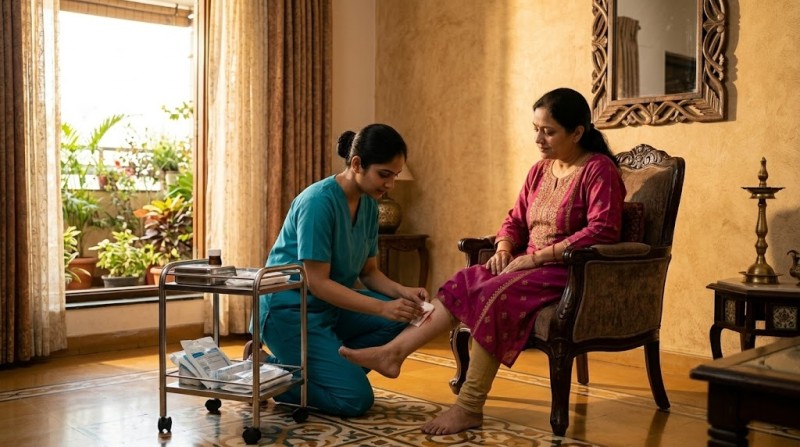
- Sleeping in a familiar space helps patients to rest better
- Being close to family gives emotional support
- Home‑cooked meals improve appetite and nutrition
- Daily routines continue with less disruption
- A calm environment reduces stress and supports emotional healing
Patients Often Recover Faster at Home:
Research shows that patients who recover in familiar home environments often heal faster compared to those who stay longer in hospitals. At home, there is less stress, better sleep, and emotional comfort — all of which directly support the body’s natural healing process. When a patient feels mentally at ease, their body responds better to treatment. This is one strong reason why many doctors today also recommend transitioning to home nursing once the patient is medically stable.
Types of Home Healthcare Services and Their Importance in Modern Patient Care: Why Choosing Home Nursing Care Over Hospital Stays?The Impact of One-on-One Nursing Attention During Recovery:
When someone is recovering, even small things can make a big difference. Individual nursing care provided by a nurse assigned only to one patient makes the recovery process much more comfortable and easier.
Below is how one-on-one nursing attention helps patients and their families to feel more confident throughout the recovery journey:
- The nurse can focus entirely on one patient’s recovery needs
- Patients can communicate freely and ask all necessary questions
- Frequent contact with the same nurse creates emotional comfort and trust
- Families are reassured that their loved one receives individual medical care
- Personalized care creates a positive attitude toward the recovery process
Reducing Exposure to Hospital-Acquired Infections During Recovery:
The World Health Organization (WHO) reports that about 1 in 10 patients worldwide are affected by infections during their hospital stay, which is called hospital-acquired infections (HAIs). This can prolong the recovery process and also require further treatment.
The following are common infections that can be transmitted during hospital stays, including:
- Pneumonia
- Urinary Tract Infections (UTIs)
- Antibiotic-resistant infections
The advantage of recovering at home is that it reduces exposure to crowded healthcare settings and to people with other illnesses. This is particularly important for elderly patients, post-surgery patients, and those with weak immune systems.
For most families, avoiding unnecessary exposure to infections is another factor in choosing home care over hospital stays.
Cost of Hospital Stay vs Home Nurse: What Families Should Consider
The cost of medical care can be a big concern for many families, especially when recovery takes time.
The table below compares the cost of hospital stay vs home nurse during long‑term recovery:
| Expense | Hospital Stay | Home Nurse |
| Room charges | Rs 2,000 – Rs 8,000/day | Not applicable |
| Nursing charges | Included in the hospital bill | Rs 1,500 – Rs 3,500/day |
| Attendant expenses | Rs 500 – Rs 1,500/day | Usually not required |
| Meals and food | Additional charges | Home-cooked meals |
| Total estimated daily cost | Rs 3,000 – Rs 10,000+ | Rs 1,500 – Rs 3,500 |
It is important to note that costs may vary by city, hospital type, nursing services, and the patient’s condition. For medically stable patients, home nursing may help reduce additional expenses while continuing care at home.
Is Home Healthcare Cheaper Than Hospital Care? Cost Comparison & Benefits Explained: Why Choosing Home Nursing Care Over Hospital Stays?No Need to Visit Hospital for Every Follow-Up:
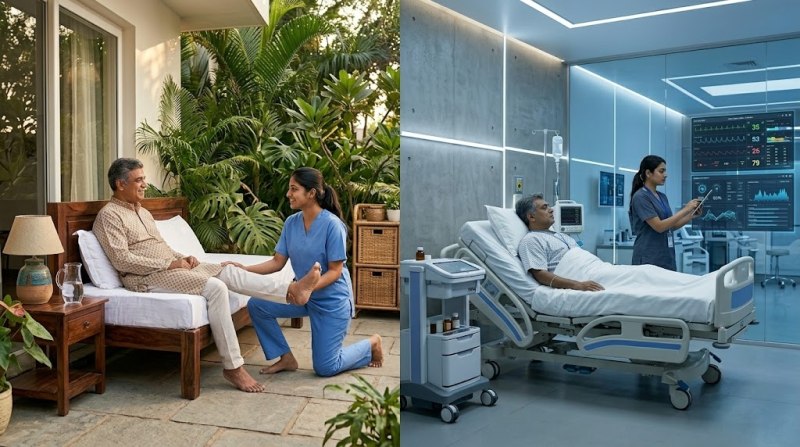
After discharge, frequent hospital visits for follow-ups can be exhausting — especially for elderly patients or those with mobility issues. Travelling, waiting in queues, and sitting in crowded OPDs is tiring and sometimes risky for recovering patients. A good home nursing service stays in regular contact with the treating doctor, shares daily health updates, and flags any concerns immediately. Minor follow-ups can often be handled through teleconsultation. This saves time, money, and unnecessary physical strain for the whole family.
Why Family Involvement Matters During the Recovery Process:
It has become easier for the patient to recover, knowing they have someone with them throughout the process.
A recent study published in BMC Nursing found that family members want to be involved in their loved one’s care and recovery. Their presence provides encouragement, emotional support, and motivation.
For example, an older person recovering from surgery feels more confident when walking, eating, and doing physical exercises in the presence of a family member. Even simple activities like sharing meals, talking, or doing other daily tasks help reduce anxiety and loneliness.
Involvement of family members in the recovery process also helps a patient to take prescribed medications on time and follow the doctor’s recommendations. When loved ones actively participate in the healing process, patients often feel more supported and positive about their recovery journey.
When Home Nursing Care May Be a Better Alternative to Extended Hospital Stays:
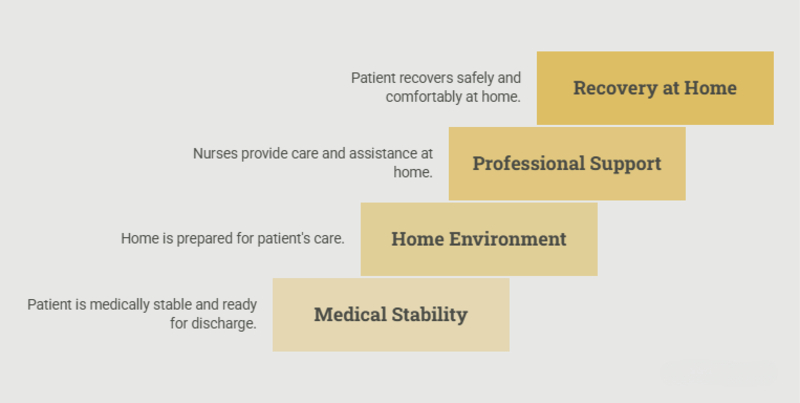
Home nursing may not be right for every medical condition, but it can be a better option once the patient is medically stable. In the following conditions, recovery can continue safely at home with professional support.
- After surgery, when assistance is required in the recovery process
- For elderly individuals who need care and assistance at home regularly
- During recovery from strokes, fractures, and other injuries
- For those suffering from chronic diseases such as diabetes, heart disease, or Parkinson’s disease
- For patients receiving palliative or end-of-life care who wish to stay close to their families
- When it becomes difficult to visit hospitals often because of mobility and travel issues
In these situations, home nursing provides appropriate care without requiring patients to be admitted to the hospital.
Making the Right Care Decision for Recovery and Long-Term Well-Being:
Choosing the right care option is not always easy. Every patient has different needs, and the best decision often balances medical advice, comfort, and family support. At Icosano Home Healthcare Services in Kolkata, we believe recovery is easier when patients can heal in the place where they feel most comfortable. By bringing professional care into the home, we aim to support both patients and families throughout the recovery journey.
FAQs:
Home nursing care allows patients to recover in a comfortable and familiar environment, with one-on-one nursing attention, lower costs, and full family involvement — making it a better choice for medically stable patients compared to extended hospital stays.
In most cases, yes. The cost of home nursing ranges between Rs 1,500 – Rs 3,500 per day, whereas a hospital stay can cost Rs 3,000 – Rs 10,000 or more per day when room charges, attendant fees, and meal expenses are all added together.
Yes, a qualified home nurse provides professional medical support including vital monitoring, medication management, wound dressing, and physiotherapy assistance — all at home. For stable patients, the quality of home nursing care is fully comparable to regular hospital ward care.
Yes. Patients who recover at home are not exposed to crowded hospital settings, which significantly reduces the risk of hospital-acquired infections like pneumonia and UTIs. This is especially important for elderly patients and those with weak immune systems after surgery.