
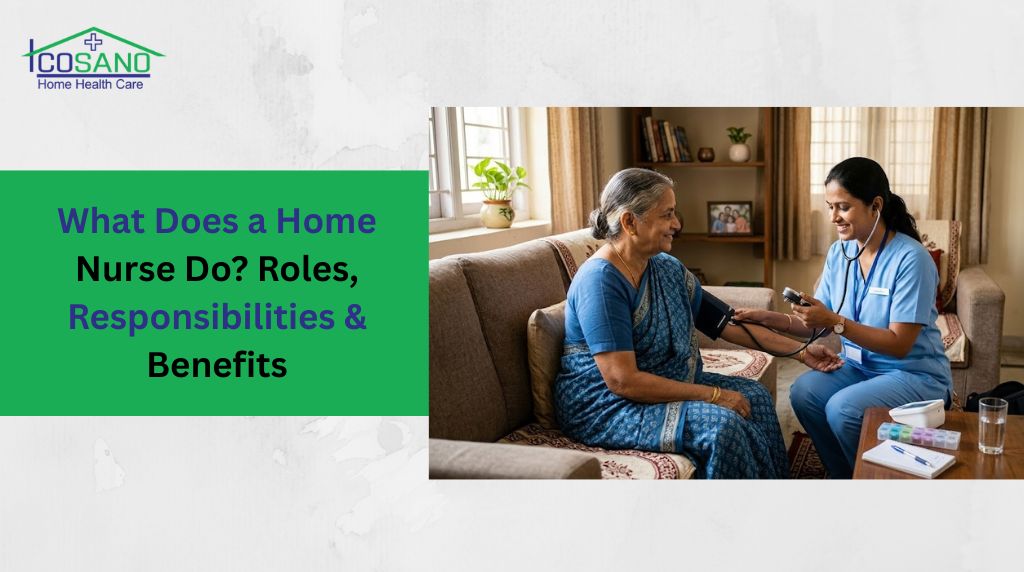
When your loved one leaves the hospital, they still require the same medical attention. You have to manage medication administration on time; dressings must be changed daily; and immediate attention is required for certain health changes.
But can you manage these responsibilities on your own while balancing work?
That is where home nursing care helps you. Home nurses bring medical professionals to your doorstep for ongoing care, ensuring there are no gaps in treatment. They provide professional medical care where your family member is more comfortable.
But what does a home nurse do? Why are they now becoming very important in healthcare systems?
In this guide, we explore the roles, responsibilities, and benefits of home nurses in delivering quality patient care at your home.
Who Is a Home Nurse and What Do They Do?
A home nurse is a trained healthcare professional who gives medical care and nursing support right in the home.
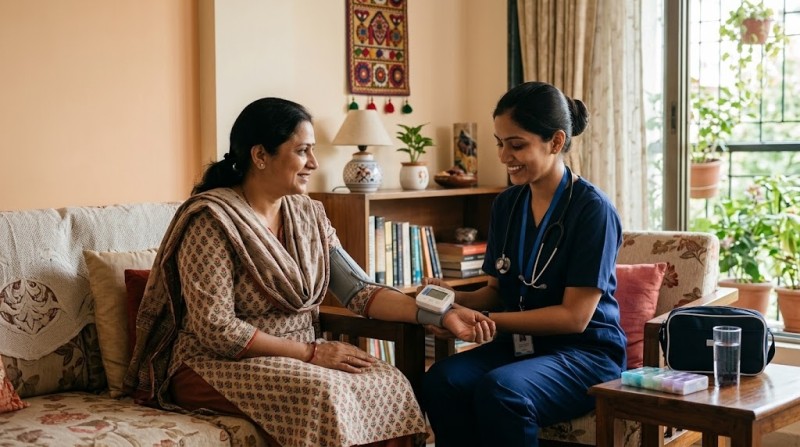
India has over 42 lakh registered nursing personnel, reflecting the growing role of professional nursing services in supporting patient care across hospitals and homes.
Most home nurses complete a General Nursing and Midwifery (GNM) diploma or a BSc Nursing degree. They also train in patient care during hospital practice. Some nurses receive additional training in areas such as:
- Critical care: Attends to critically ill patients requiring constant monitoring
- Elderly care: Supports the health and daily care needs of older adults
- Palliative care: Provide comfort and relief from serious illnesses
- Post‑surgery recovery: Helps with recovery after surgery
- Rehabilitation nurse: Helps stroke, injury, and chronically ill patients recover
Various patients need different kinds of nursing care depending upon their medical condition, age group, and recovery requirements. There is often confusion among many families about whether they need a caregiver or a home nurse.
Here is a simple comparison between a caregiver and a home nurse:
| Caregiver | Home Nurse |
| Takes care of daily activities | Gives medical attention and monitoring |
| Provides help with activities such as washing, feeding and movement | Gives medication and dressing of wounds |
| Provides non-medical assistance | Trained in nursing professionally |
| Not able to do any clinical work | Able to do medical procedures under the supervision of healthcare professionals |
In addition to their education and services, home nurses perform various other tasks to meet patients’ healthcare needs. Let’s understand in detail.
Key Roles and Responsibilities of a Home Nurse:
Below are some key roles and responsibilities of a home nurse.
1. Daily Patient Monitoring:
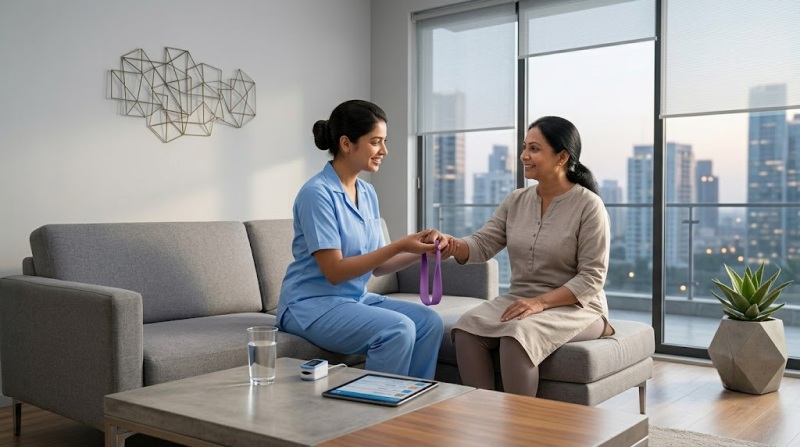
Recovery does not depend only on medication; there is also a need to monitor how your family member’s body responds. For this, home nurses measure vital body signs, such as blood pressure, pulse, body temperature, and oxygen saturation.
2. Medication Management:
The home nurse ensures that your loved one gets the correct medication at the correct times and also keeps track of any side effects.
3. Health Assessment and Monitoring:
The health of your relatives is observed on a daily basis by a home nurse. The early identification of minor changes in their health is helpful in preventing complications.
4. Wound and Post-Surgical Care:
An ICMR multicentric study found that surgical site infections (SSIs) occur in about 5.2% of patients in India, and many cases are detected only after patients return home.
A home nurse can assist with any post-surgical or wound-related care for one who may be recovering from surgery. They regularly change their dressing and monitor the signs of infection.
5. Assistance with Daily Activities:
If your family member is recovering from surgery or has limited mobility, a home nurse can help them safely perform daily activities and encourage independence. They also monitor how well the patient manages routine tasks and identify any changes that may affect recovery.
6. Chronic Disease Management:
According to the Longitudinal Ageing Study of India (LASI), nearly 75% of older adults in India live with at least one chronic health condition.
If your family member has a long‑term condition like diabetes, heart disease, stroke, or COPD, a home nurse can help manage daily care. They monitor symptoms, follow the treatment plan, and ensure that the illness is managed safely at home.
7. Family Caregiver Assistance:
A home nurse helps you feel more confident. They guide you on medicines, nutrition, daily care routines, and safety steps. With this support, you are better prepared to look after your loved one’s recovery and well‑being at home.
Conditions That Benefit Most from Home Nursing Care:
Home nursing is not only for patients who are very seriously ill. Many different health conditions can be managed very well at home with the right professional support. Here are some common conditions where home nursing makes a big difference:
- Post-Stroke Care: After a stroke, patients often struggle with movement, speech, and daily activities. A home nurse helps with safe positioning, mobility exercises, fall prevention, and keeps a close watch on any new symptoms that may indicate another episode.
- Dementia and Alzheimer’s Care: Patients with memory-related conditions need a calm, structured routine. Home nurses follow a daily schedule that gives the patient a sense of security. They also keep the home environment safe and monitor for any sudden behavioral changes.
- Cancer Patients on Chemotherapy: Chemotherapy causes extreme fatigue, nausea, and weakness. A home nurse helps manage these side effects, assists with nutrition, monitors for infections, and provides port care between hospital sessions. Having a nurse at home during this time gives the patient and family real peace of mind.
- Dialysis Patients: Patients on dialysis need careful monitoring before and after each session. A home nurse tracks fluid intake, checks blood pressure, watches for complications, and ensures the patient follows the diet and medication plan between dialysis sessions.
- Diabetes Management: Uncontrolled blood sugar can cause serious complications. A home nurse checks glucose levels regularly, ensures proper insulin administration, monitors feet for wounds that may go unnoticed, and educates the patient and family about diet and lifestyle changes.
- COPD and Respiratory Conditions: For patients with breathing difficulties, a home nurse monitors oxygen levels, assists with breathing exercises, manages inhaler routines, and ensures that oxygen equipment at home is being used correctly and safely.
Questions to Ask Before Hiring a Home Nurse:
Choosing the right home nursing service is an important decision. Before you finalise anyone, ask these practical questions:
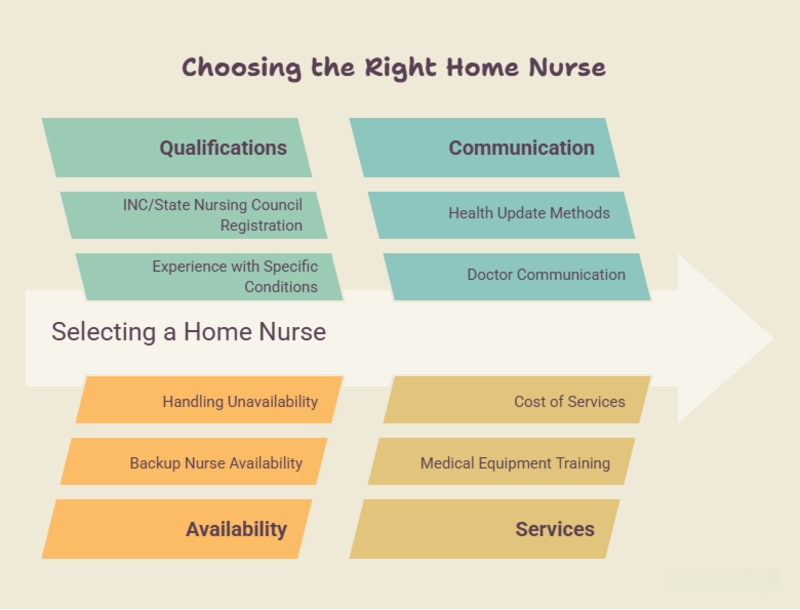
- Is the nurse registered with the Indian Nursing Council (INC) or State Nursing Council?
- What is their experience with my loved one’s specific condition?
- What happens if the nurse is unavailable due to illness or emergency — is there a backup nurse?
- How are health updates communicated to us and to the treating doctor?
- Are they trained to handle medical equipment like oxygen, feeding tubes, or catheters?
- What is included in the daily visit and what is charged separately?
- Is there a supervisor or senior nurse who oversees the care being given?
- How do they handle a medical emergency at home?
A professional and trustworthy home nursing service will be happy to answer all of these questions clearly and honestly. If they avoid any of these questions, that itself is an important signal.
Benefits of Hiring a Home Nurse for Patient Care at Home:
The main benefits of home nursing care and how they make life easier for you and your family are as follows:
| Benefit | How It Helps |
| Personalized Care | Care is personalized according to the needs of patients |
| Comfortable Environment | The healing process takes place in the comforts of home |
| Fewer Hospital Stays | Minimizes visits to hospitals |
| Safety | Improved safety for elderly and bedridden patients |
| Cost‑Effective | Often costs less than long hospital stays |
| Family Support | Reduces caregiver stress through professional assistance and guidance |
Read Also: Benefits of Home Healthcare
When Should You Consider Home Nursing Services?
You may consider home nursing services if your family member:
- Has just come home from the hospital and still needs medical care
- Needs treatment at home, but does not want hospital admission
- Takes many medicines that need to be managed carefully
- Requires medical equipment like oxygen, feeding tubes, or catheters
- Finds it hard to visit hospitals or clinics frequently
- Needs support during cancer treatment or palliative care
- Has a condition that requires regular check‑ups by a nurse or doctor
- Would benefit from professional care while staying in the comfort of home
How Home Nurses Work with Doctors?
Many families do not realise that a home nurse is not working alone. They are an important link between your loved one and their treating doctor. This connection is what makes home nursing truly professional and safe.
A home nurse follows a care plan that is prepared based on the doctor’s instructions. During every visit, they record all observations — vital signs, wound condition, patient behavior, and any complaints. If they notice something that needs the doctor’s attention, they report it immediately. This could be a rise in blood pressure, a wound that is not healing well, or a new symptom that the family may have missed.
With telemedicine now becoming very common in India, home nurses can also coordinate online consultations between the patient and their doctor. The nurse is present during the call, shares the recorded health data, and helps the doctor make the right decision without the patient needing to travel to a clinic or hospital.
This three-way partnership between patient, nurse, and doctor ensures that care never has a gap — even when the patient is sitting comfortably at home.
Read Also: Why Home Healthcare Is Growing: Trends, Demand, and the Future of Patient Care
Why Professional Home Nursing Matters?
At Icosano Home Healthcare Services, Kolkata, we often meet families who want to care for their loved ones at home but need professional medical assistance.
For example, 72-year-old Mr. Sen was discharged home after surgery. His family worried about how they could manage medical care, such as administering medications, providing wound care, and other needs.
Our professional home nursing team visited regularly, monitored his health, changed dressings, administered medications, and tracked his recovery progress. They also educate his family about diet, movement and other precautions to follow at home.
With professional nursing supervision, Mr. Sen recovered comfortably in familiar surroundings while avoiding unnecessary hospital visits.
This highlights the importance of home nursing care services in supporting safe recovery, continuity of care, and peace of mind for families.
Conclusion: Improving Health and Comfort Through Home Nursing Care
Healing is often easier when patients are surrounded by familiar faces and the comfort of home. Home nurses help make this possible by providing skilled care while supporting both patients and their families. Their presence can turn a stressful recovery journey into one that feels safer, more manageable, and filled with hope.
FAQs:
The duties and responsibilities of a home nurse include monitoring vital signs, managing medications, wound dressing, assisting with daily activities, and coordinating with the treating doctor. They provide complete professional nursing care right at your home so recovery stays on track without hospital visits.
On a daily basis, a home nurse checks the patient’s blood pressure, pulse, and oxygen levels, gives medicines on time, changes wound dressings, assists with movement, and updates the family about the patient’s health progress.
Yes, a professional home nurse works closely with your treating doctor by sharing daily health records, reporting any changes in the patient’s condition, and coordinating telemedicine consultations when needed.
Home nursing care is needed by patients recovering from surgery, elderly patients with chronic conditions, stroke or dementia patients, cancer patients on chemotherapy, and anyone who uses medical equipment like oxygen cylinders or feeding tubes at home and needs regular professional monitoring.
Before hiring, always verify that the home nurse is registered with the Indian Nursing Council, has experience with your loved one’s condition, and that the agency provides a backup nurse if needed. Ask how health updates and nursing reports are shared with you and your doctor for complete transparency.
Home nursing services can be arranged for a few hours per day, full-day shifts, or even round-the-clock care depending on the patient’s medical condition and needs. Your home healthcare provider will help you choose the right schedule based on the doctor’s recommendation and the patient’s daily care requirements.