Bringing your loved one home after a stroke can feel like a big relief. But when they come home, they may need help with eating, bathing, walking, or even have difficulty speaking.
So, how can you manage these and make their recovery journey easier and safer at home?
This is where proper stroke patient care at home becomes important.
The aim of this guide is to help family members and caregivers to understand how to care for a stroke patient at home. Here we talk about daily care routines, personal hygiene, feeding, medication management, mobility, rehabilitation and ways to prevent complications.
What Care Does a Stroke Patient Need after Hospital Discharge?
Coming home after a stroke does not mean your family member starts their normal routines.
A 2026 study done around 30 hospitals in India found that around 68% of stroke patients still had some form of disability when they were discharged from the hospital.
In the following areas, your loved one may need help when they come home after hospital discharge:
- Movement: Due to weakness in arms or legs, your family members may face difficulty in routine movements such as walking, standing or getting out of bed.
- Speaking: Sometimes they cannot speak clearly or understand what you are saying, so communication becomes difficult.
- Eating: Stroke can damage the part of the brain that controls the muscles of the mouth, throat and tongue. This can make it hard to chew and swallow.
- Memory: They can not remember old things or have trouble focusing.
- Personal care: A stroke weakens one side of the body, harms balance, numbs sensation, and causes extreme fatigue, making daily tasks hard and unsafe without help.
- Bladder and bowel problems: Face difficulty controlling urination or bowel movements.
How to Manage the Daily Care Needs of a Stroke Patient at Home
Not every stroke patient needs everything that we discussed above. Before starting home care for stroke patients, you should first understand what your loved one can do independently and when they need your help.
Knowing how to take care of a stroke patient at home can make daily care easier for both of you.
Here is a care plan for stroke patients at home:
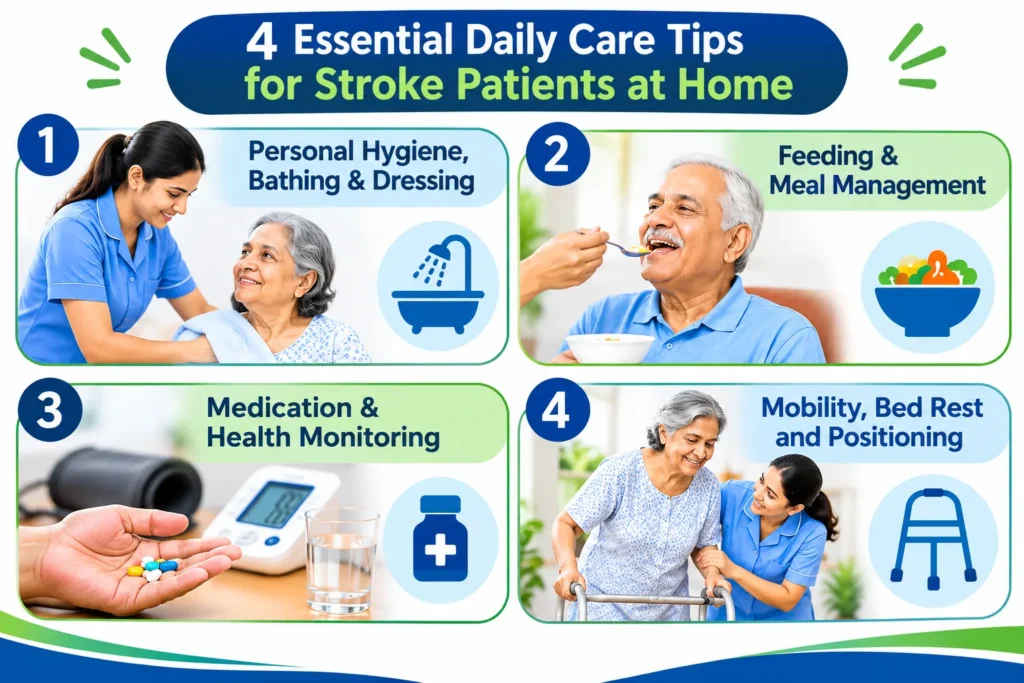
1. Personal Hygiene, Bathing and Dressing
Your loved one may require help during bathing, tooth brushing, combing hair, and dressing up. You can make it easier through the use of a shower chair, grab bars, and anti-slip mats in the bathroom.
Other than personal care, regularly check their skin for any signs of redness, injuries, and bedsores.
2. Feeding and Meal Management
Healthy meals are essential to meet your loved one’s daily nutritional requirements. If they can not eat by themselves, help them during mealtimes.
Sometimes stroke patients may face difficulty in swallowing, so follow your doctor’s advice about food texture and feeding.
3. Medication and Health Monitoring
Follow the proper timing of medication given by your doctor. For this, write a list of medicines and their timing so you do not miss any doses.
If needed, check blood pressure and blood sugar. If you notice any new symptoms or any changes in your loved one’s health condition, discuss them with your doctor during medical visits.
4. Mobility, Bed Rest and Positioning
If your loved one faces any difficulty in mobility, help them to move safely. If needed, use walking aids such as walking sticks, crutches or walkers.
Read Also: How to Choose the Right Medical Equipment for Home Care
If they spend long hours in bed, change their position as advised by the healthcare team to reduce the risk of bedsores. Never pull or lift them by their affected arm.
How Rehabilitation Helps Stroke Patients Recover at Home
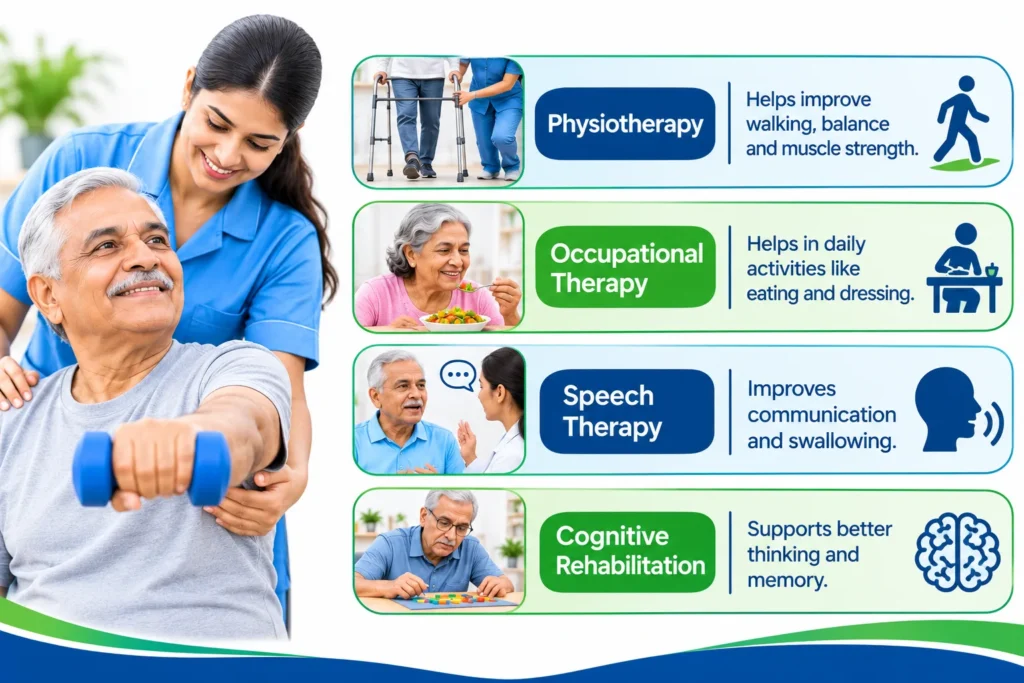
Rehabilitation is essential for stroke recovery. After a stroke, patients face difficulty in doing their routine activities. Rehabilitation helps them to regain strength and learn to do everyday activities again.
The following rehabilitation is advised by your doctor, based on your loved one’s condition:
| Type of Therapy | How it Helps |
| Physiotherapy at home | Helps improve walking, balance, muscle strength, and limb movements. |
| Occupational therapy | Helps in performing daily activities such as eating, dressing, and holding objects. |
| Speech therapy | For improving communication and problems related to swallowing. |
| Cognitive rehabilitation | This can involve activities that help improve thinking and memory. |
Read Also: What Are the Benefits of Physiotherapy at Home? A Complete Guide
How You Can Reduce the Risk of Complications After a Stroke at Home
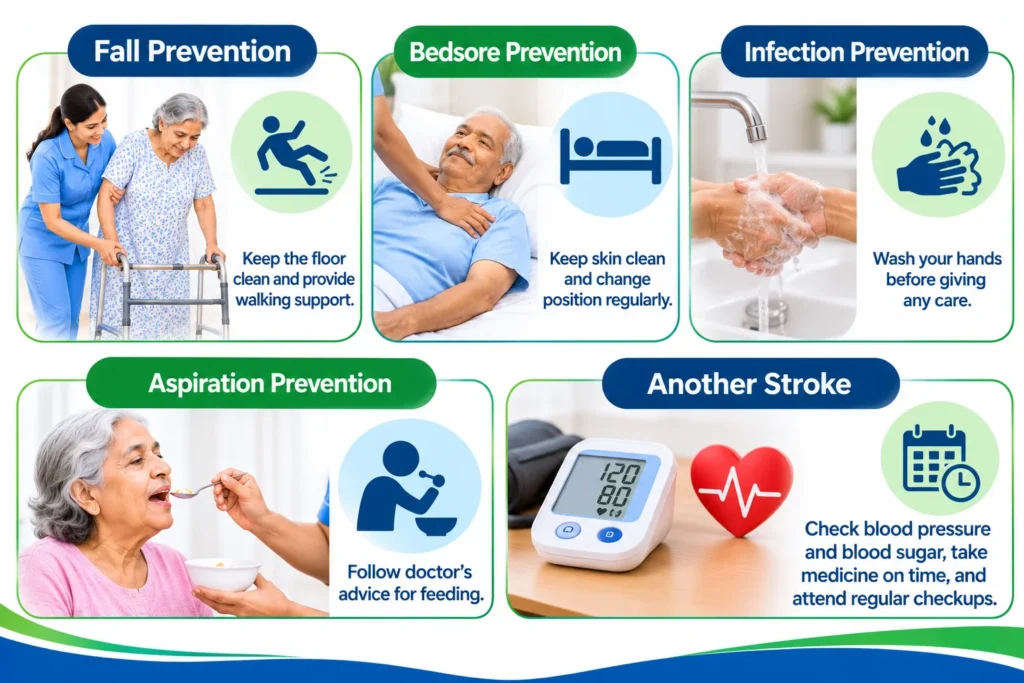
Here are some preventive measures that you should keep in mind to prevent any complications during after-stroke care at home:
- Fall prevention: To prevent falls, keep the floor clean and remove loose rugs or other objects that may cause falls. Also, provide your loved one with walking support.
- Bedsore prevention: Bedsores are common with patients who stay in bed for a long time. To prevent this, keep your loved one’s skin clean and dry and also change position intermittently.
- Infection prevention: To prevent any infection, wash your hands before giving any care.
- Aspiration prevention: If your loved one has swallowing problems, follow your doctor’s instructions regarding feeding.
- Another stroke: Check blood pressure and blood sugar as advised by your doctor, give them medicine on time, and attend regular checkups to prevent the risk of another stroke.
Warning Signs That Need Immediate Medical Attention
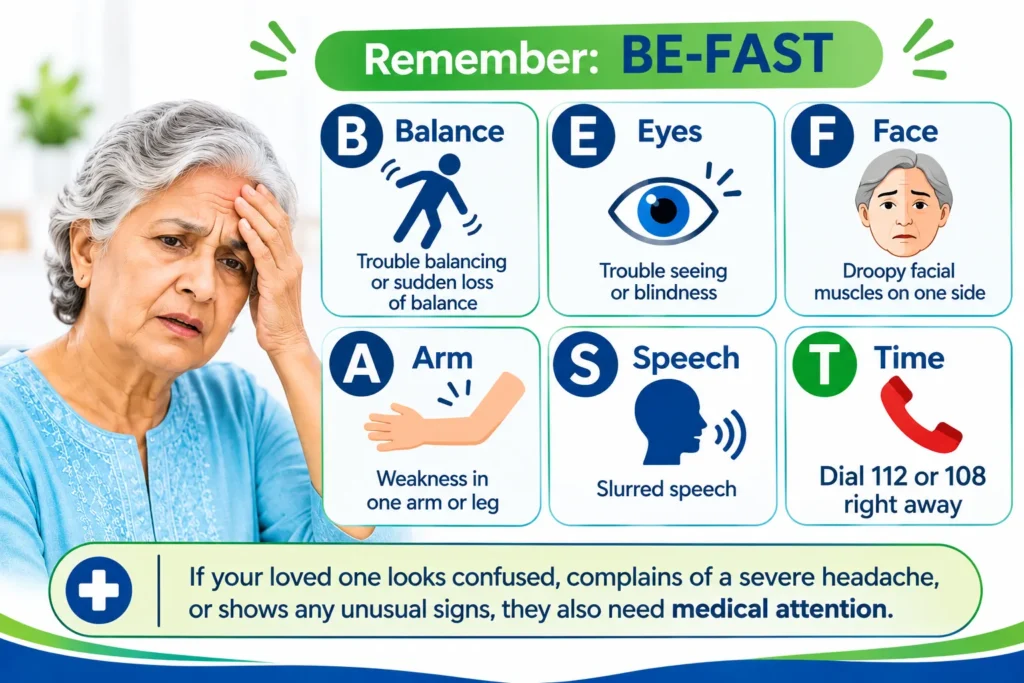
For stroke patients, the chances of another stroke are high. In this situation, you should know about warning signs so you can act quickly.
For this, one easy way to remember these signs is BE-FAST:
- B – Balance: Trouble balancing or sudden loss of balance
- E – Eyes: Trouble seeing or blindness
- F – Face: Droopy facial muscles on one side.
- A – Arm: Weakness in one arm or leg.
- S – Speech: Slurred speech.
- T – Time: Dial 112 or 108 right away
If your loved one looks confused, complains of a severe headache, or shows any unusual signs, they also need medical attention.
Read Also: Home Health Care vs Hospital Care: Which Option Is Right for Your Family?
When Does a Stroke Patient Need a Home Nurse?
Sometimes, it becomes hard to manage stroke patients at home, mainly when they need regular help with daily activities or medical care. In such cases, family members seek professional nursing care for stroke patients at home.
You may need home nursing services if your loved one:
- Is bedridden or requires continuous assistance
- Needs help with daily routines such as feeding, bathing, and dressing
- If they require catheter or wound care
- Requires monitoring of regular vital-sign
Final Thoughts: How the Right Care and Family Support Can Make Stroke Recovery Easier
The process of recovering from a stroke requires time, patience, and understanding. Some days are easier and some days are hard. But every small step is important. To make recovery easier, you can give your loved ones time and support when they are recovering.
If your family needs more support, Icosano Home Health Care Services Pvt. Ltd., Kolkata, can provide them with home care services. With the right care, medical guidance and family support, stroke patients can work towards a better quality of life.